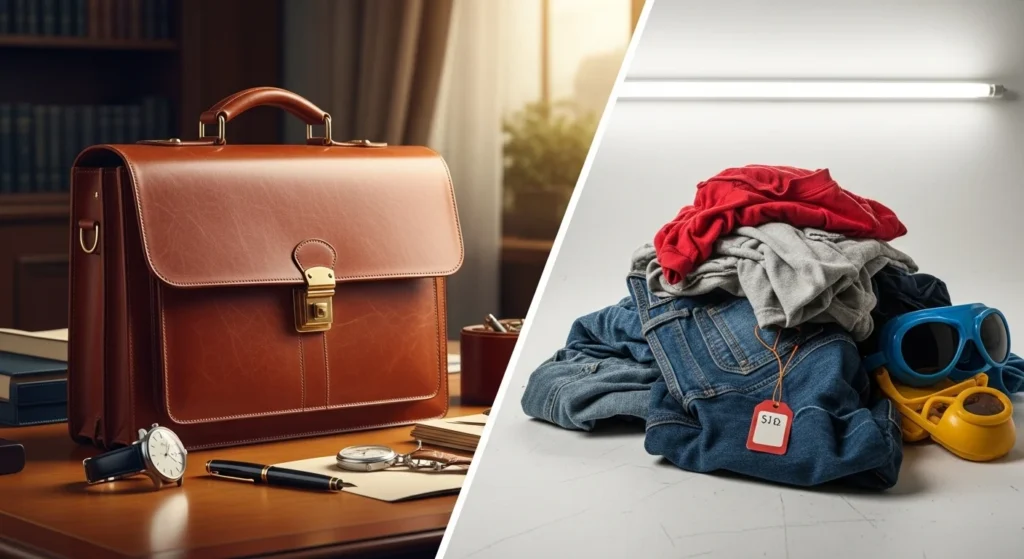
Most products today are built for one goal:
Stay looking new for as long as possible.
Scratch-resistant.
Fade-proof.
Disposable.
But luxury objects follow a completely different rule.
True luxury isn’t designed to stay perfect.
It’s designed to evolve.
A fine leather bag doesn’t remain pristine…
It develops character.
A mechanical watch isn’t meant to feel modern forever…
It becomes timeless.
A luxury object often becomes more beautiful because of time, not despite it.
And that is one of the most misunderstood secrets of high-end design:
Luxury is built to age, not to freeze.
Let’s explore why.
The Luxury Difference: Perfection Isn’t the Goal
In mass production, aging is a flaw.
In luxury, aging is part of the story.
Luxury objects are often designed with the belief that:
- Wear creates uniqueness
- Patina creates depth
- Time creates meaning
Luxury doesn’t fight time.
It collaborates with it.
1. Luxury Materials Are Chosen for Transformation
One reason luxury ages beautifully is simple:
The materials are alive.
High-quality materials don’t just “hold up.”
They change gracefully.
Examples include:
- Full-grain leather developing patina
- Solid wood deepening in tone
- Brass and silver oxidizing softly
- Wool and cashmere molding to the wearer
- Mechanical movements gaining soul through use
Luxury materials aren’t plastic-perfect.
They are natural, evolving, human.
2. Patina Is Not Damage — It’s Proof of Life
In luxury design, patina is celebrated.
Patina is the soft aging effect that comes from:
- Touch
- Light
- Air
- Time
- Use
A luxury bag with slight darkening on the handles tells a story.
It says:
“This has been carried through real life.”
That’s why collectors often value aged luxury more than untouched perfection.
Because perfection is generic.
Patina is personal.
3. Luxury Is Built Around Timeless Form, Not Trends
Fast products are trend-shaped.
Luxury products are archetype-shaped.
High-end design often avoids:
- Loud patterns
- Seasonal gimmicks
- Temporary aesthetics
Instead, luxury focuses on:
- Balanced proportions
- Classic silhouettes
- Minimal design purity
That’s why a Chanel flap bag or a Rolex Submariner still feels relevant decades later.
Luxury doesn’t chase “new.”
It aims for eternal.
Comparison Table: Disposable vs Aging Luxury Design
| Mass-Market Objects | Luxury Objects |
|---|---|
| Designed to look new | Designed to look richer with time |
| Synthetic materials | Natural materials that evolve |
| Trend-driven styling | Timeless proportions |
| Wear = damage | Wear = character |
| Replace quickly | Keep for life, pass down |
4. Craftsmanship Allows Graceful Wear
Luxury is not only material.
It’s construction.
Hand-finished details ensure that aging happens beautifully.
Luxury craftsmanship includes:
- Saddle stitching that holds for decades
- Reinforced stress points
- Solid hardware instead of plated plastic
- Hand-polished edges
- Replaceable parts
Luxury objects are designed with repairability in mind.
A luxury item isn’t meant to be thrown away.
It’s meant to be lived with.
5. Luxury Designers Plan for Decades, Not Seasons
Fast fashion thinks in months.
Luxury design thinks in generations.
A luxury brand often designs with the question:
“What will this look like after 10 years of use?”
That’s why luxury embraces:
- Leather that softens
- Denim that fades naturally
- Watches that last 50+ years
- Furniture that gains warmth
Aging is not an accident.
It’s engineered beauty.
6. The Emotional Value Increases as the Object Ages
Luxury is deeply psychological.
The older a luxury object becomes, the more it carries:
- Memory
- Identity
- Personal history
A scratched suitcase isn’t ruined.
It’s traveled.
A worn wallet isn’t old.
It’s loyal.
Luxury objects become companions, not products.
That emotional aging is part of their design power.
7. Visible Imperfection Signals Authenticity
Modern culture loves flawless surfaces.
But luxury often signals the opposite:
Realness over perfection.
A handmade ceramic cup may have asymmetry.
A leather jacket may crease.
That imperfection communicates:
- Human touch
- Authentic production
- Unrepeatable uniqueness
Luxury aging is the opposite of mass sameness.
Real-Life Examples of Beautiful Aging Luxury
- Hermès leather bags darkening with patina
- Raw denim jeans fading uniquely to the wearer
- Rolex watches becoming heirlooms with gentle wear
- Louis Vuitton trunks gaining character through travel
- Italian leather shoes molding perfectly over time
Luxury is designed not for the shelf…
But for life.
Hidden Tips: How to Choose Objects That Age Well
If you want timeless quality, look for:
- Natural materials (full-grain leather, wool, wood)
- Repairable construction
- Minimal branding
- Classic shapes
- Brands with heritage craftsmanship
Buy less, but buy things that can evolve.
Mistakes to Avoid
- Thinking luxury means staying flawless
- Overprotecting objects meant to be lived with
- Confusing “new” with “valuable”
- Buying trend luxury that won’t age timelessly
- Choosing coated materials that crack instead of patina
True luxury is not fragile perfection.
It is durable beauty.
Key Takeaways
- Luxury objects are designed to evolve, not stay new
- Patina is considered character, not damage
- Timeless materials age with richness
- Craftsmanship ensures graceful wear and repairability
- The emotional value of luxury increases with time
FAQ: Luxury and Aging Design
1. Why do luxury objects look better as they age?
Because they use natural materials and craftsmanship that develop patina and character over time.
2. What is patina in luxury goods?
Patina is the soft aging effect that adds depth, warmth, and uniqueness through use.
3. Is wear considered damage in luxury?
Not always. In many luxury traditions, wear is part of authenticity and story.
4. Why don’t luxury brands focus on looking “new”?
Because luxury is about timelessness, not trend freshness.
5. How can I buy items that age beautifully?
Choose natural materials, classic design, repairable construction, and heritage-quality craftsmanship.
Luxury Isn’t Newness — It’s Time Made Visible
Fast products are built to impress quickly…
Then disappear.
Luxury objects are built differently.
They are designed to:
- Last
- Transform
- Carry meaning
- Become personal
- Age with grace
True luxury isn’t about freezing something in perfection.
It’s about allowing time to make it more beautiful.
Because the most valuable objects don’t stay untouched…
They become part of your life.