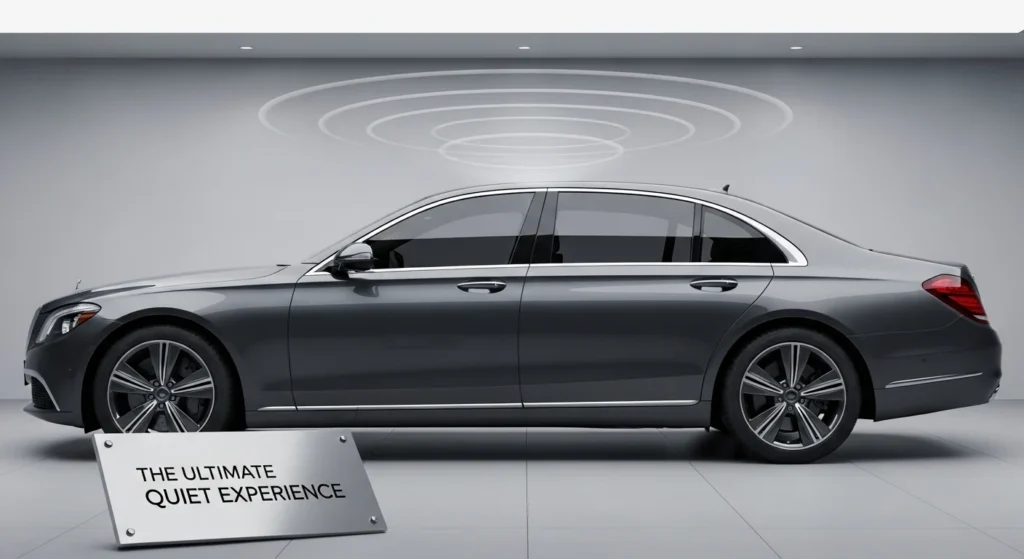
The Moment Silence Takes Over
You close the door.
Not a slam. Not a click.
A muted, confident thud.
The outside world fades—traffic, horns, people, urgency.
You haven’t driven an inch, yet something shifts.
Your shoulders drop.
Your breathing slows.
This is the moment silence defines luxury.
Not because luxury cars are empty of sound—but because they are carefully protected from noise.
In a loud world, silence has become the rarest commodity.
And luxury cars have quietly mastered it.
Silence Is Not the Absence of Sound — It’s the Absence of Stress
Many people misunderstand silence in luxury cars.
It’s not about making everything quiet.
It’s about removing the sounds your brain finds exhausting.
Luxury cabins filter out:
- High-frequency road noise
- Random vibration patterns
- Wind buffeting at human-sensitive ranges
- Inconsistent mechanical feedback
What remains is controlled, predictable, low-frequency sound—something the human nervous system finds calming.
This is why silence in a luxury car feels comforting, not eerie.
Why Noise Feels Cheap (Even When You Can’t Explain Why)
The human brain evolved to treat unpredictable noise as a warning.
Sudden sounds mean:
- Danger
- Loss of control
- Environmental instability
Budget and mid-range cars often leak:
- Tire roar on rough roads
- Engine vibration through pedals
- Wind noise around mirrors
- Panel resonance at speed
You may not consciously register these—but your body does.
Luxury cars remove this constant low-level alertness.
That’s why silence feels expensive.
The Engineering Obsession Behind Quiet Cabins
Silence in luxury cars isn’t accidental.
It’s engineered layer by layer.
Manufacturers invest in:
- Multi-layer acoustic glass
- Foam-filled body cavities
- Noise-canceling resonance chambers
- Isolated subframes
- Precision door sealing systems
Brands like Rolls-Royce famously engineer cabins so quiet that engineers had to add subtle sound because passengers found total silence disorienting.
True luxury silence is tuned, not absolute.
Materials Matter More Than You Think
Luxury interiors don’t just look premium.
They absorb sound differently.
Examples:
- Open-pore wood dampens vibration
- Thick carpets absorb mid-range noise
- Soft leather prevents sound reflection
- Alcantara reduces echo compared to plastic
Every material choice affects how sound behaves inside the cabin.
This is why luxury cars sound calm even on imperfect roads.
Comparison: Silence in Luxury vs Standard Cars
| Feature | Standard Car | Luxury Car |
|---|---|---|
| Glass | Single-layer | Acoustic multi-layer |
| Door Seals | Basic rubber | Multi-chamber seals |
| Cabin Materials | Hard plastics | Sound-absorbing surfaces |
| Road Noise | Constant | Heavily filtered |
| Mental Fatigue | Builds quickly | Significantly reduced |
Silence isn’t one upgrade.
It’s a system.
The Psychology of Quiet Power
Luxury cars don’t need to announce themselves.
They don’t rely on:
- Loud exhausts
- Artificial engine noise
- Overly aggressive feedback
Silence communicates confidence.
This is why vehicles from Bentley and Mercedes-Benz feel authoritative without being intimidating.
Quiet dominance is more persuasive than loud performance.
Why Silence Reduces Driver Fatigue
Fatigue doesn’t come from driving alone.
It comes from:
- Continuous noise exposure
- Micro-vibrations
- Constant sensory correction
Automotive research shows that lower cabin noise reduces:
- Stress hormone levels
- Muscle tension
- Reaction time degradation
- Post-drive exhaustion
This is why long journeys in luxury cars feel shorter—even when traffic is worse.
Silence preserves mental energy.
Real-Life Example: The Long-Distance Difference
Drivers who upgrade to quieter vehicles often notice:
- Fewer headaches after travel
- Less irritability in traffic
- Reduced need to raise their voice
- Lower perceived journey time
Many don’t connect this to silence.
But their nervous system does.
Electric Cars Changed Silence — Luxury Perfected It
Electric powertrains removed engine noise.
But silence exposed new problems:
- Tire noise became louder
- Wind noise became more noticeable
- Cabin resonance became obvious
Luxury manufacturers adapted fastest.
Brands like Lexus focused on refining secondary noise—the sounds people only notice once engines disappear.
Silence became harder to achieve, not easier.
Hidden Tip: Listen When You’re Not Driving
To evaluate true cabin silence:
- Sit inside with the engine off
- Close all doors and windows
- Notice external sound leakage
- Pay attention to pressure changes
- Observe how your breathing changes
Luxury silence feels insulating—not isolating.
Common Mistakes People Make About Silent Cars
❌ Assuming louder equals more powerful
❌ Thinking silence is boring
❌ Overvaluing engine sound over cabin quality
❌ Ignoring long-term fatigue effects
Silence doesn’t remove excitement.
It gives you control over it.
Why This Matters Today
Modern life is relentless:
- Notifications
- Traffic
- Open-plan offices
- Constant digital noise
Luxury cars have become:
- Personal decompression chambers
- Mobile quiet zones
- Mental recovery spaces
Silence isn’t indulgence anymore.
It’s protection.
Actionable Steps: How to Choose True Quiet
When shopping for a luxury car:
- Drive on rough roads, not smooth highways
- Test at low speeds where noise is hardest to hide
- Turn off music during the test drive
- Listen near mirrors and door frames
- Pay attention to how quickly you relax
Silence reveals itself emotionally, not logically.
Key Takeaways
- Silence is the defining feature of luxury cars
- It’s engineered, layered, and psychologically tuned
- Quiet reduces fatigue and stress
- Materials matter as much as mechanics
- True luxury whispers—it never shouts
Frequently Asked Questions
1. Are silent cars safer to drive?
Yes. Reduced fatigue and better focus improve real-world driving safety.
2. Does silence mean lack of performance?
No. Many high-performance luxury cars are both fast and quiet.
3. Can aftermarket insulation recreate luxury silence?
Partially, but factory integration is difficult to match.
4. Why don’t all cars focus on silence?
Cost, weight, and engineering complexity limit mass adoption.
5. Do SUVs achieve the same silence as sedans?
They can, but sedans still offer acoustic advantages.
Conclusion
Luxury cars don’t impress by being louder.
They impress by letting the world fall away.
Silence isn’t emptiness.
It’s intention.
And in the modern world, nothing feels more luxurious than quiet control.
Disclaimer: This article is for general informational purposes and reflects industry design principles rather than specific purchasing advice.
Pingback: Why Luxury Interiors Matter More Than Speed — The Real Reason Premium Cars Feel Superior
Pingback: Why Luxury Cars Are Designed for Long Drives — The Quiet Engineering That Protects You for Hours
Pingback: Why Luxury Cars Emphasize Quiet — The Hidden Power of Silence in Premium Driving