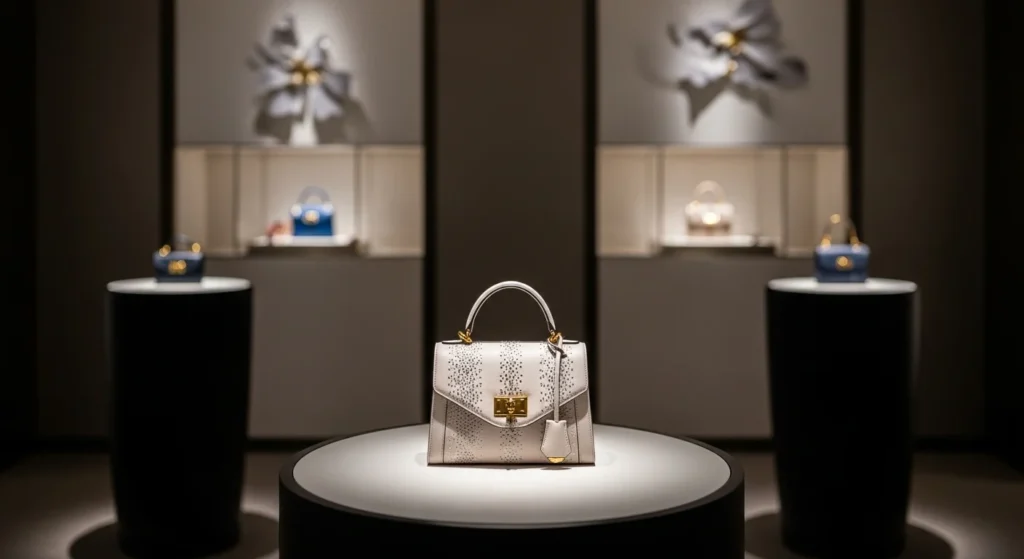
Why Fewer Choices Feel Like a Relief, Not a Loss
At first glance, it feels backward.
Why would a luxury brand—one that charges more, promises exclusivity, and targets discerning customers—offer fewer choices instead of more?
Shouldn’t high-end experiences mean unlimited customization, endless menus, and infinite options?
Yet the most powerful luxury brands do the opposite.
They simplify.
They edit.
They restrict.
And somehow, that restriction feels calming, confident, and even generous.
This isn’t accidental.
It’s psychological precision.
Luxury reduces choice on purpose—not to limit you, but to protect your attention, reduce decision stress, and signal authority.
Once you understand why, you’ll never look at premium brands—or your own decision-making—the same way again.
Choice Overload: When More Options Make People Miserable
Modern life trains us to believe that more choice equals more freedom.
Behavioral psychology shows the opposite.
When people are faced with too many options, they experience:
- Mental fatigue
- Anxiety about choosing wrong
- Lower satisfaction after deciding
- Regret, even when the outcome is good
This phenomenon is known as choice overload.
Studies consistently show that when consumers face dozens of options, they are less likely to buy—and less happy when they do.
Luxury brands understand this deeply.
They don’t sell abundance.
They sell certainty.
Why Luxury Customers Don’t Want to Decide Everything
Contrary to popular belief, high-end customers are not seeking control.
They’re seeking relief.
Luxury buyers often already make complex decisions all day—business, leadership, investments, responsibilities.
When they step into a luxury environment, they want:
- Fewer decisions
- Clear guidance
- Trusted curation
- Confidence that the “right” choice has already been made
Reducing options isn’t restrictive—it’s respectful.
It says:
“We’ve already done the thinking for you.”
Curation Is the Real Product in Luxury
Luxury is not about giving you everything.
It’s about giving you only what’s worth having.
Every limited menu, short collection, or pared-down offering sends a powerful signal:
“Nothing here is accidental.”
This transforms the brand’s role from seller to expert curator.
And curation creates trust faster than variety ever could.
The Status Signal Hidden in Fewer Choices
Choice reduction is also a subtle form of status signaling.
Here’s why it works:
- Mass brands offer endless options because they must please everyone
- Premium brands offer fewer options because they know who they’re for
- Luxury brands don’t ask what you want—they show you what matters
Limitation communicates authority.
It says:
“We don’t need to compete for your attention.”
That confidence is what feels expensive.
How Luxury Uses Choice Reduction Across Industries
Luxury applies this strategy everywhere—quietly and consistently.
Fashion
- Seasonal collections instead of infinite SKUs
- Limited color palettes
- Signature silhouettes repeated over time
Hospitality
- Short, refined menus
- Fixed tasting courses
- Minimal room categories
Technology
- Few product lines
- Minimal configuration paths
- Default recommendations
Wellness & Beauty
- Edited routines
- Simplified ingredient lists
- Clear hero products
In every case, less choice increases perceived value.
Luxury vs Mass Market: A Clear Comparison
| Feature | Mass Market | Luxury |
|---|---|---|
| Number of options | Many | Few |
| Decision effort | High | Low |
| Customer role | Chooser | Trusting participant |
| Emotional response | Anxiety | Calm |
| Brand signal | Desperation | Authority |
| Satisfaction after purchase | Often lower | Consistently higher |
Luxury doesn’t overwhelm—it reassures.
Why Fewer Choices Increase Satisfaction After Buying
Here’s the hidden benefit most people miss.
When choice is limited:
- People second-guess less
- Comparison regret drops
- Confidence in the purchase increases
- Emotional attachment grows
Luxury brands optimize not just for the moment of sale—but for how you feel after.
This is why luxury customers are more loyal, even when prices rise.
The Neuroscience Behind Decision Relief
Decision-making consumes cognitive energy.
When options are removed:
- The brain enters a relaxed state
- Emotional processing takes over
- Trust replaces analysis
This shift is essential.
Luxury experiences are designed to move you out of analytical thinking and into felt confidence.
That’s where desire lives.
Why This Strategy Works Especially Well Today
Today’s consumers are drowning in:
- Endless content
- Infinite products
- Constant comparison
- Algorithmic noise
In this environment, reduction feels like oxygen.
Luxury stands out not by shouting louder—but by removing friction.
Less choice becomes a form of care.
Mistakes Brands Make When Copying Luxury
Not all reduced choice feels premium.
Here’s where brands get it wrong:
- Cutting options without improving quality
- Removing choice without adding guidance
- Limiting availability without building trust
- Confusing scarcity with authority
Luxury only works when reduction is paired with expert confidence.
How Individuals Can Apply This Principle in Daily Life
You don’t need to be a brand to benefit from this insight.
Try applying luxury logic to your own life:
- Create fixed routines to reduce daily decisions
- Limit wardrobe colors
- Pre-decide meals or workouts
- Remove unnecessary options from your schedule
The result isn’t boredom—it’s clarity.
Why Reduced Choice Feels Like Care, Not Control
The deepest reason this works?
Because choice reduction removes pressure.
Luxury doesn’t ask you to prove yourself through decisions.
It lets you rest inside someone else’s expertise.
That’s not control.
That’s confidence transfer.
Key Takeaways
- Luxury reduces choice to reduce mental stress
- Fewer options increase trust, satisfaction, and loyalty
- Choice limitation signals authority and confidence
- Curation is the true luxury product
- In a noisy world, simplicity feels premium
Frequently Asked Questions (FAQ)
1. Why do luxury brands avoid offering too many options?
Because too many choices create anxiety and reduce satisfaction. Luxury prioritizes emotional comfort.
2. Isn’t limiting choice risky for sales?
Not in luxury. Reduced choice increases conversion and loyalty when paired with trust.
3. Does this strategy work for non-luxury brands?
Yes, but only if quality and confidence support the reduction.
4. Is choice reduction the same as scarcity marketing?
No. Scarcity pressures; choice reduction reassures.
5. Why do consumers feel calmer with fewer options?
Because cognitive load drops and emotional processing takes over.
Conclusion: Luxury Isn’t About More—It’s About Less, Done Perfectly
Luxury doesn’t impress by offering everything.
It impresses by knowing exactly what not to offer.
By reducing choice, luxury protects attention, builds trust, and creates emotional safety.
In a world obsessed with options, true power lies in confident restraint.
That’s why luxury feels effortless.
And that’s why fewer choices can feel like the most generous thing of all.
Disclaimer: This article is for educational and informational purposes only and reflects general observations about consumer behavior and branding psychology.
Pingback: Why Luxury Beauty Uses Minimal Labels — The Quiet Strategy That Builds Trust, Desire, and Long-Term Loyalty
Pingback: Why Luxury Ownership Changes Behavior — The Quiet Psychological Shift Most People Don’t Expect