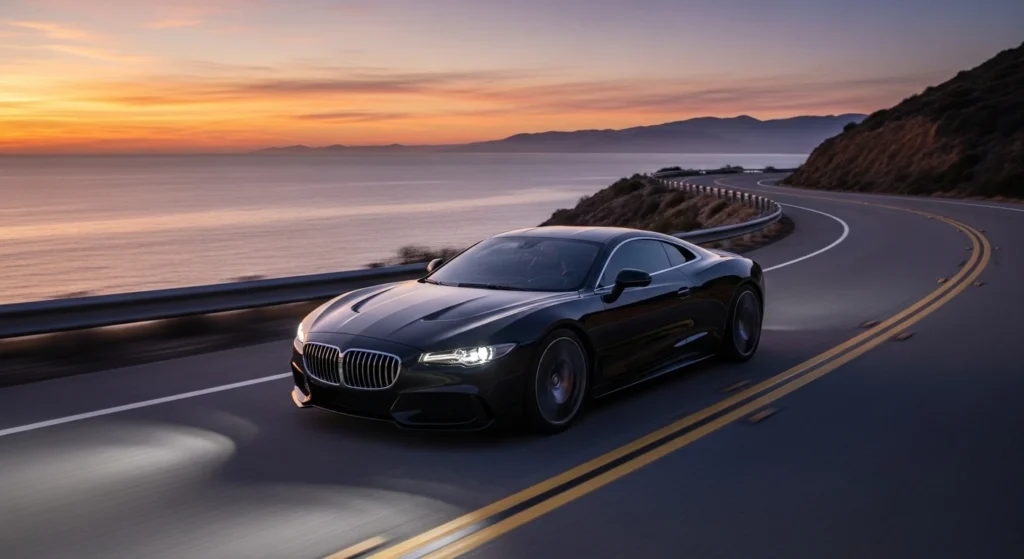
The Calm You Notice Immediately
You merge onto the highway.
Traffic speeds up.
The road opens.
The car settles.
No wandering.
No tension in your hands.
No sudden corrections.
That’s when you realize something subtle but powerful:
The car feels stable.
Luxury cars have a way of making motion feel predictable—almost reassuring. And that sensation isn’t about luck or extra features. It’s the result of thousands of quiet engineering decisions designed to remove uncertainty from driving.
Stability Isn’t About Speed — It’s About Trust
Many people confuse stability with slowness.
In reality, stability is about trust.
A stable car:
- Tracks straight without correction
- Responds consistently to inputs
- Doesn’t surprise the driver
Luxury cars are engineered to behave the same way at:
- Low speeds
- Highway cruising
- Emergency maneuvers
That consistency is what allows your brain to relax.
And relaxation is a luxury.
The Core Philosophy: Remove Uncertainty
Luxury engineering begins with a simple goal:
“The driver should never wonder what the car will do next.”
That philosophy affects everything:
- Chassis tuning
- Suspension geometry
- Steering calibration
- Weight distribution
- Electronic stability systems
Instead of pushing limits, luxury cars define boundaries—and stay comfortably within them.
Brands like Mercedes-Benz and Lexus build stability into the foundation, not as an add-on.
Weight Distribution: Balance Before Brilliance
One of the biggest contributors to stability is balance.
Luxury cars prioritize:
- Even front-to-rear weight distribution
- Low center of gravity
- Wide, planted stance
This reduces:
- Body roll
- Nose dive under braking
- Rear-end instability during acceleration
Even when luxury cars are heavier overall, that mass is managed.
Weight doesn’t wander.
It settles.
Chassis Rigidity: The Invisible Backbone
Stability starts with structure.
Luxury cars use:
- High-strength steel
- Aluminum subframes
- Reinforced mounting points
A rigid chassis allows suspension to do its job accurately.
Without rigidity:
- Steering feels vague
- Suspension reacts late
- The car feels nervous
This is why older luxury cars often still feel solid—the structure doesn’t flex or fatigue easily.
Suspension Tuning: Calm Movement, Not No Movement
Luxury suspension isn’t about eliminating motion.
It’s about controlling it.
Instead of sharp reactions, luxury suspension:
- Absorbs bumps gradually
- Limits excessive body motion
- Settles quickly after disturbances
Adaptive and air suspension systems—common in cars from BMW or Audi—adjust constantly to road conditions.
The car doesn’t fight the road.
It negotiates with it.
Steering Calibration: Predictability Over Sharpness
Steering plays a major role in perceived stability.
Luxury steering is tuned to:
- Resist sudden inputs
- Provide steady feedback
- Remain stable at speed
This reduces:
- Overcorrection
- Lane wandering
- Driver fatigue
The wheel doesn’t feel light or twitchy.
It feels anchored.
That weight tells your hands: you’re in control.
Electronic Stability Systems: Quiet Guardians
Modern luxury cars rely heavily on advanced electronic systems—but you rarely notice them.
These systems:
- Monitor wheel speed
- Track steering angle
- Predict loss of traction
When needed, they intervene subtly—often before you sense danger.
Unlike abrupt corrections in cheaper cars, luxury systems:
- Act early
- Act gently
- Preserve natural driving feel
Stability is protected without drama.
Noise Control: Stability You Can Hear (or Don’t)
Noise influences how stable a car feels.
More noise equals more perceived chaos.
Luxury cars invest heavily in:
- Acoustic glass
- Dense insulation
- Isolated suspension mounts
Less noise means:
- Speed feels slower
- Motion feels smoother
- The car feels heavier and more planted
Silence reinforces stability—even when conditions are demanding.
Luxury Cars vs Ordinary Cars: A Clear Comparison
| Aspect | Luxury Cars | Mass-Market Cars |
|---|---|---|
| Chassis | Highly rigid | Cost-optimized |
| Suspension | Adaptive, settling | Reactive, basic |
| Steering | Weighted, stable | Light, twitchy |
| Noise Control | Extensive | Limited |
| Driver Confidence | High | Variable |
Luxury doesn’t remove risk.
It removes uncertainty.
Why This Matters Today
Driving today is more complex.
Traffic density.
Distractions.
Variable road conditions.
Stability reduces:
- Mental fatigue
- Stress
- Reaction time errors
A stable car doesn’t just feel better.
It allows you to be a better driver.
Common Mistakes Buyers Make
Many buyers misjudge stability because they:
- Test-drive only at low speeds
- Confuse excitement with quality
- Avoid “heavy” steering
Stability often feels subtle at first.
Its value becomes clear when conditions worsen.
Hidden Tip: How to Test Stability Properly
When evaluating a luxury car:
- Drive at highway speed
- Make gentle lane changes
- Hit uneven pavement
- Notice how quickly the car settles
The best luxury cars don’t react loudly.
They correct quietly.
Actionable Steps for Buyers
If stability matters to you:
- Look for adaptive suspension
- Pay attention to steering weight
- Test at higher speeds
- Evaluate cabin noise
- Don’t rush the decision
Stability reveals itself under calm scrutiny.
Key Takeaways
- Luxury cars feel stable by design, not accident
- Balance and rigidity create confidence
- Suspension controls motion, not speed
- Steering prioritizes predictability
- Stability reduces fatigue and stress
Frequently Asked Questions
1. Are luxury cars safer because they feel stable?
Stability improves control and confidence, which supports safer driving behavior.
2. Does stability mean luxury cars handle poorly?
No. They prioritize control over aggressiveness.
3. Why do luxury cars feel better at high speeds?
Because they’re tuned for highway composure, not city excitement.
4. Is stability more important than performance?
For daily driving, yes—stability matters more often.
5. Can smaller luxury cars feel just as stable?
Yes, if balance and tuning are done well.
Conclusion: Stability Is the Luxury You Trust
Luxury cars don’t impress you by reacting fast.
They impress you by not needing to.
They stay composed.
They stay predictable.
They stay calm—no matter what the road throws at them.
That feeling of stability isn’t excitement.
It’s confidence.
And confidence is the quiet luxury that matters most.
Disclaimer: This article is for general informational purposes only and reflects broad automotive engineering principles rather than specific vehicle advice.