That First Turn of the Wheel
You sit inside a luxury car for the first time.
You ease the steering wheel.
The car doesn’t dart.
It doesn’t jump.
It settles.
There’s a weight to everything—the steering, the doors, even the way the car responds to your inputs.
Some drivers describe it as “heavy.”
Others say “solid.”
A few mistake it for sluggishness.
But that feeling isn’t accidental.
Luxury cars are designed to feel heavy—because that sensation quietly communicates safety, control, and authority.
“Heavy” Doesn’t Mean Slow — It Means Anchored
This is the first misconception to clear up.
Luxury cars aren’t heavy because engineers failed to make them lighter.
They feel heavy because they’re engineered to feel anchored to the road.
That sensation comes from:
- Steering resistance
- Suspension damping
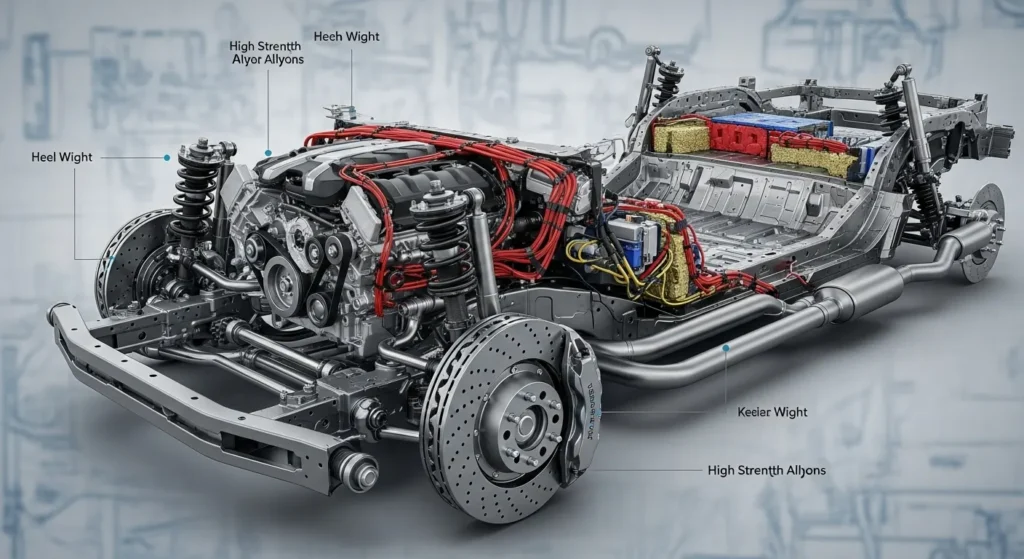
- Body rigidity
- Weight distribution
- Chassis tuning
In luxury engineering, light often equals nervous.
And nervous is the opposite of luxury.
The Psychology of Weight: Why Heaviness Feels Safer
Human perception plays a major role here.
Across industries, weight is associated with:
- Durability
- Protection
- Quality
- Authority
A heavier-feeling object signals trust.
Luxury automakers lean into this instinct intentionally.
When a car feels planted:
- Drivers relax
- Inputs become smoother
- Confidence increases at speed
This is why brands like Mercedes-Benz and Bentley tune feedback to emphasize mass—even when advanced materials reduce actual weight.
Real Weight vs Perceived Weight: A Crucial Difference
Here’s what most people don’t realize:
Perceived weight matters more than actual weight.
Luxury cars use:
- Heavier steering calibration
- Slower yaw response
- Softer initial suspension movement
This creates the impression of mass—even if the vehicle isn’t dramatically heavier on a scale.
Meanwhile, sporty cars exaggerate lightness by:
- Over-boosted steering
- Stiffer suspension
- Sharper throttle response
One feels exciting.
The other feels composed.
Steering Tuning: Where “Heavy” Is Born
Steering is the biggest contributor to that heavy sensation.
Luxury steering is tuned to:
- Resist sudden inputs
- Filter road imperfections
- Stay stable at highway speeds
In vehicles from BMW or Audi, the steering often feels:
- Light while parking
- Firm at speed
- Calm during lane changes
This isn’t laziness.
It’s deliberate resistance that tells your brain: you’re in control.
Suspension Damping: Why the Car Moves Less Than the Road
Luxury suspension doesn’t chase stiffness.
It chases settling behavior.
Instead of bouncing quickly over imperfections, luxury suspension:
- Absorbs energy slowly
- Allows controlled body movement
- Prevents sharp rebounds
This makes the car feel heavier because:
- The body doesn’t react instantly
- The cabin stays level
- Motion feels deliberate
Air suspension systems in cars from Rolls-Royce are famously tuned so the road feels distant—almost muted.
That distance equals calm.
Sound and Silence: Weight You Can’t See
Noise affects perceived weight more than people expect.
Luxury cars invest heavily in:
- Acoustic glass
- Structural foam
- Engine mount isolation
- Active noise cancellation
Less noise equals more perceived mass.
When sound disappears:
- Speed feels slower
- Motion feels smoother
- Weight feels greater
That’s why luxury cars feel heavier at 100 km/h than economy cars do at 60.
Structural Rigidity: Doors That Close With Authority
Ever noticed how luxury car doors close?
That “thud” isn’t drama—it’s engineering.
Luxury vehicles use:
- Reinforced door frames
- Thicker seals
- Rigid body shells
This reduces flex, vibration, and noise—while reinforcing the sensation of solidity.
Your brain interprets rigidity as weight.
And weight as quality.
Luxury vs Sporty Cars: A Clear Comparison
| Aspect | Luxury Cars | Sporty / Economy Cars |
|---|---|---|
| Steering Feel | Weighted, calm | Light, reactive |
| Suspension | Absorptive, settling | Firm, bouncy |
| Cabin Noise | Highly insulated | More road noise |
| Body Movement | Controlled, slow | Quick, sharp |
| Emotional Signal | Safety, authority | Agility, excitement |
Both are valid.
But they serve different lives.
Why This Matters Today
Modern driving is mentally exhausting.
Traffic.
Distractions.
Long commutes.
Luxury cars reduce cognitive load by:
- Minimizing surprise
- Smoothing reactions
- Filtering chaos
That “heavy” feeling isn’t about performance.
It’s about emotional bandwidth.
Common Mistakes Buyers Make
Many buyers misjudge luxury cars by:
- Test-driving too briefly
- Expecting sporty sharpness
- Equating lightness with quality
Luxury reveals itself slowly.
If it feels boring in the first five minutes, it might feel perfect after five years.
Hidden Tip: How to Test Weight Properly
When evaluating a luxury car:
- Drive it on uneven roads
- Hold steady speed on the highway
- Change lanes gently
- Notice how little correction is needed
The less you work, the more luxurious the car.
Actionable Steps for Buyers
If you value calm and confidence:
- Don’t fear “heavy” steering
- Test long drives, not quick sprints
- Pay attention to fatigue after driving
- Focus on smoothness over sharpness
Luxury is about how the car supports you.
Key Takeaways
- Luxury cars feel heavy by design
- Weight signals safety, stability, and quality
- Steering and suspension create perceived mass
- Silence amplifies the feeling of solidity
- “Heavy” often means less fatigue, not less performance
Frequently Asked Questions
1. Are luxury cars actually heavier than others?
Often yes—but perception matters more than actual weight.
2. Does heavy steering mean outdated engineering?
No. It’s a deliberate calibration choice.
3. Why do luxury cars feel calmer at high speeds?
Because weight, damping, and insulation reduce sensory overload.
4. Is heavy feel better for daily driving?
For most people, yes—especially in traffic and on highways.
5. Can a car feel heavy but still handle well?
Absolutely. Control and agility aren’t opposites.
Conclusion: Heaviness Is Confidence You Can Feel
Luxury cars don’t rush.
They don’t flinch.
They don’t demand your attention—they protect it.
That heavy feeling isn’t a flaw.
It’s a quiet promise that the car has your back—mile after mile, year after year.
Disclaimer: This article is intended for general informational purposes and reflects broad automotive design principles rather than specific vehicle recommendations.