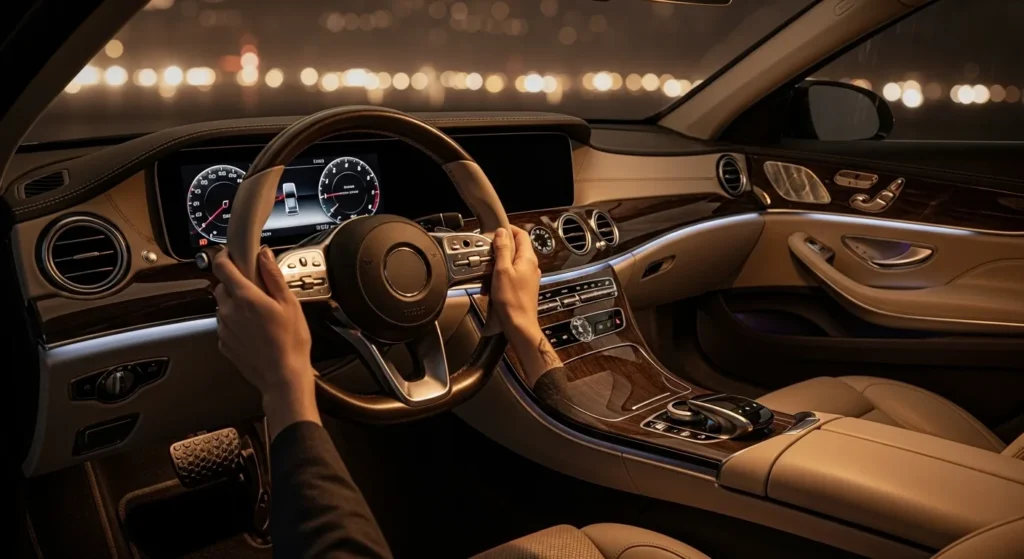
The Silence You Feel Before You Hear
You close the door.
The outside world disappears.
Traffic fades.
Engines soften.
Your shoulders drop.
That moment—before you even move—is when luxury announces itself.
Not through sound.
But through quiet.
Luxury cars don’t treat silence as a side effect. They treat it as a core feature—engineered, protected, and refined with extraordinary effort.
And once you understand why, loud cars start to feel oddly… cheap.
Quiet Isn’t Absence — It’s Control
Silence in a luxury car isn’t emptiness.
It’s controlled sound.
Luxury engineers don’t remove all noise. They remove unwanted noise:
- Random vibrations
- Harsh frequencies
- Mechanical chaos
What remains is calm, intentional sound—soft engine notes, muted road feedback, gentle airflow.
That balance is why quiet feels expensive.
The Psychology of Quiet: Why Silence Feels Luxurious
Human brains interpret noise as work.
Every sound demands processing:
- Is it a threat?
- Is something wrong?
- Should I react?
Luxury cars reduce this cognitive load.
- Safety
- Control
- Confidence
That’s why brands like Mercedes-Benz and Lexus invest heavily in acoustic comfort.
Quiet isn’t indulgence.
It’s relief.
NVH Engineering: The Science Behind Silence
In automotive engineering, quiet lives under one discipline: NVH—Noise, Vibration, and Harshness.
Luxury brands attack NVH at every level:
- Engine mounts that absorb vibration
- Isolated suspension subframes
- Structural foam inside body panels
- Multi-layer insulation
Each layer removes a specific frequency band.
Silence isn’t achieved once.
It’s achieved hundreds of times, piece by piece.
Acoustic Glass: Why Windows Matter More Than You Think
One of the biggest breakthroughs in luxury quiet is acoustic glass.
Unlike standard glass, it uses:
- Multiple layers
- Sound-dampening films
- Different thicknesses
This disrupts sound waves before they enter the cabin.
The result:
- Less wind noise
- Reduced traffic sounds
- A calmer interior at speed
This is why highway driving in luxury cars feels eerily peaceful.
Engine Tuning: Quiet Power Is Intentional
Luxury engines are not tuned to announce themselves.
They’re tuned to disappear.
This includes:
- Balanced rotating assemblies
- Softer combustion characteristics
- Exhaust systems designed to cancel frequencies
In many luxury cars, you feel acceleration before you hear it.
That inversion—power without noise—is a defining luxury trait.
Suspension and Road Noise: The Forgotten Source of Sound
Most people blame engines for noise.
In reality, tires and suspension are bigger culprits.
Luxury cars reduce road noise by:
- Using foam-filled tires
- Isolating suspension components
- Designing bushings that absorb vibration
This prevents harsh frequencies from traveling into the cabin.
The road still exists.
You’re just not forced to listen to it.
Structural Rigidity: Why Quiet Starts With the Body
A flexible body creates noise.
A rigid body contains it.
Luxury cars use:
- Reinforced chassis designs
- Tighter panel tolerances
- Stronger bonding techniques
This prevents:
- Creaks
- Rattles
- Long-term noise creep
That’s why older luxury cars often remain quiet long after others become noisy and tiring.
Quiet vs Loud: A Clear Comparison
| Aspect | Luxury Cars | Mass-Market Cars |
|---|---|---|
| Cabin Noise | Actively controlled | Passively accepted |
| Glass | Acoustic, multi-layer | Standard |
| Vibration | Isolated | Transmitted |
| Engine Sound | Muted, refined | Prominent |
| Long-Drive Fatigue | Low | Higher |
Luxury doesn’t eliminate sound.
It curates it.
Why This Matters Today
Modern life is loud.
Notifications.
Traffic.
Crowded cities.
Luxury cars act as acoustic shelters.
Quiet:
- Lowers stress
- Reduces fatigue
- Improves focus
Silence inside the car isn’t escapism.
It’s recovery.
Common Mistakes Buyers Make
Many buyers misunderstand quiet because they:
- Test-drive with music playing
- Focus on engine sound
- Equate noise with performance
True luxury reveals itself when you turn everything off.
That’s when the engineering speaks.
Hidden Tip: How to Test Cabin Quiet Properly
When evaluating a luxury car:
- Turn off the radio
- Drive at highway speed
- Listen for wind, tire, and vibration noise
- Notice how calm your breathing feels
Silence shows itself in your body before your ears.
Actionable Steps for Buyers
If quiet matters to you:
- Look for acoustic glass
- Test at highway speeds
- Avoid oversized wheels (they increase noise)
- Pay attention to long-term reviews
Silence is easiest to appreciate when it’s gone.
Key Takeaways
- Luxury cars emphasize quiet to reduce mental load
- Silence is engineered, not accidental
- NVH control defines premium driving
- Quiet improves long-term comfort and focus
- True luxury whispers—it doesn’t shout
Frequently Asked Questions
1. Are quiet cars less engaging to drive?
No. They simply separate engagement from noise.
2. Why do luxury cars feel calmer at high speeds?
Because wind and road noise are heavily suppressed.
3. Does quiet mean the engine is weak?
Not at all. Many quiet cars are extremely powerful.
4. Do electric luxury cars make this even better?
Yes—quietness becomes more noticeable without engine noise.
5. Why does silence increase the feeling of luxury?
Because it signals control, effort, and refinement.
Conclusion: Silence Is the Sound of Confidence
Luxury cars don’t need to announce themselves.
They don’t compete for attention.
They create space—mental, physical, emotional.
That quiet you feel isn’t emptiness.
It’s engineering, intention, and care—working together so you can simply exist, undisturbed, while the world rushes by.
Disclaimer: This article is for general informational purposes only and reflects broad automotive design principles rather than specific vehicle recommendations.
Pingback: Why Luxury Cars Are Tuned Differently — The Quiet Engineering That Makes Them Feel Effortless