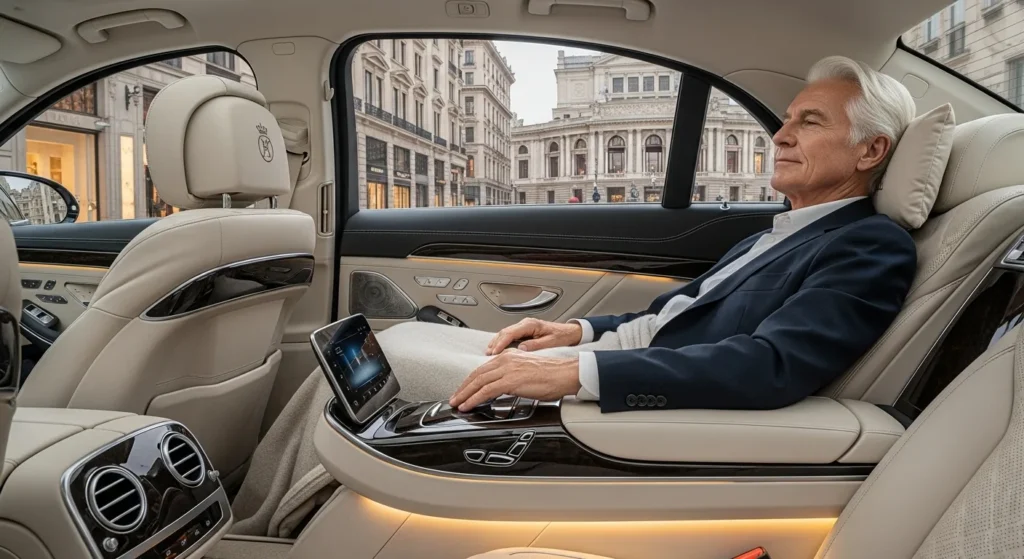
Fast Is Easy — Feeling Good Is Hard
Anyone can build a fast car.
Add horsepower.
Tighten the suspension.
Sharpen the throttle.
But building a car that still feels good after hours on the road?
That’s rare.
Luxury cars don’t ignore speed—but they deliberately refuse to make it the priority. Instead, they ask a different question:
“How should the driver feel after the journey is over?”
That single question explains why comfort consistently wins over speed in luxury car design.
Speed Impresses Quickly — Comfort Reveals Itself Slowly
Speed creates instant excitement.
Comfort creates long-term satisfaction.
This is why short test drives can be misleading. Almost any modern car feels quick for ten minutes. But after:
- Traffic
- Rough roads
- Long highway stretches
Speed stops mattering.
Comfort starts to dominate every decision.
Luxury cars are designed for living with them—not proving something in brief bursts.
The Core Luxury Philosophy: Protect the Human
Luxury engineering starts with a human-first mindset.
Instead of asking:
- How fast can it accelerate?
- How sharp can it feel?
Luxury brands ask:
- How much effort does driving require?
- How much fatigue builds over time?
- How calm does the driver remain?
Manufacturers like Mercedes-Benz and Lexus consistently prioritize reducing physical and mental strain.
Speed taxes the body.
Comfort preserves it.
Seat Design: Where Comfort Becomes Measurable
Luxury seats are engineered like long-term support systems, not furniture.
They feature:
- Multi-density foam layers
- Extended thigh and lumbar support
- Precise posture alignment
- Micro-adjustments for individual bodies
Over time, these seats:
- Reduce pressure points
- Improve circulation
- Prevent stiffness and back pain
A sporty seat might hold you tightly.
A luxury seat supports you gently—hour after hour.
Suspension Tuning: Absorb the Road, Not the Driver
Speed-focused cars use stiff suspension to control movement.
Luxury cars use intelligent damping to manage energy.
Their suspension is tuned to:
- Absorb imperfections gradually
- Prevent sharp impacts
- Settle quickly after bumps
Adaptive and air suspension systems—common in vehicles from BMW and Audi—constantly adjust to road conditions.
The result is less vibration, less correction, and far less fatigue.
Power Delivery: Smooth Strength Beats Sharp Speed
Luxury cars are rarely underpowered.
They simply refuse to dramatize power.
Instead of explosive acceleration, luxury engines deliver:
- Early, usable torque
- Linear throttle response
- Minimal vibration
This allows:
- Effortless overtaking
- Calm highway cruising
- Reduced stress during everyday driving
Speed becomes available—but optional.
That’s the luxury difference.
Steering Feel: Stability Over Excitement
Fast cars reward aggressive steering.
Luxury cars reward relaxed hands.
Luxury steering is tuned to:
- Resist twitchiness
- Remain stable at speed
- Require fewer micro-corrections
Over long drives, this:
- Reduces shoulder and arm fatigue
- Improves lane discipline
- Lowers mental load
Comfort isn’t just physical—it’s neurological.
Noise Control: Why Quiet Beats Speed Every Time
Speed increases noise.
Luxury cars aggressively minimize noise through:
- Acoustic glass
- Structural insulation
- Isolated suspension mounts
- Engine vibration control
Lower noise levels:
- Reduce stress hormones
- Improve focus
- Make speed feel slower
That’s why luxury cars feel calmer at high speeds than ordinary cars do at moderate ones.
Comfort vs Speed: A Side-by-Side Reality Check
| Aspect | Luxury Cars | Speed-Focused Cars |
|---|---|---|
| Primary Goal | Reduce fatigue | Maximize excitement |
| Suspension | Absorbing, adaptive | Stiff, reactive |
| Cabin Noise | Quiet, insulated | Loud, engaging |
| Steering | Stable, predictable | Sharp, demanding |
| Long-Drive Comfort | High | Often tiring |
Speed thrills briefly.
Comfort lasts.
Why This Matters Today
Modern driving isn’t about racing.
It’s about:
- Congested roads
- Long commutes
- Mental overload
In these conditions, speed adds little value.
Comfort:
- Improves focus
- Reduces mistakes
- Makes driving sustainable
Luxury cars reflect how people actually drive—not how they imagine driving.
Common Mistakes Buyers Make
Many buyers misjudge luxury cars because they:
- Focus on horsepower numbers
- Expect instant excitement
- Test-drive for too little time
Comfort can feel subtle at first.
Its value becomes undeniable later.
Hidden Tip: How to Evaluate Comfort Properly
When test-driving:
- Drive at highway speeds
- Sit in traffic briefly
- Turn off the radio
- Notice posture, breathing, and tension
The less you notice the car, the better it’s performing.
Actionable Steps for Buyers
If comfort matters more than bragging rights:
- Prioritize seat quality
- Test suspension on rough roads
- Pay attention to cabin noise
- Avoid oversized wheels
- Think long-term, not instantly
Luxury is measured in hours, not seconds.
Key Takeaways
- Luxury cars emphasize comfort because it matters most in real life
- Speed excites briefly; comfort sustains daily use
- Seats, suspension, and silence reduce fatigue
- Smooth power delivery lowers stress
- True luxury protects energy, not ego
Frequently Asked Questions
1. Are luxury cars slower because they focus on comfort?
No. Many are extremely fast—they just don’t advertise it.
2. Why does comfort feel more valuable over time?
Because fatigue compounds, while excitement fades.
3. Is comfort better than speed for daily driving?
For most people and roads, yes.
4. Do luxury cars sacrifice handling for comfort?
No. They prioritize control over aggression.
5. Can comfort and speed coexist?
Yes—but luxury ensures speed never compromises comfort.
Conclusion: Comfort Is Confidence That Lasts
Luxury cars don’t chase speed.
They don’t compete for attention.
They focus on how you feel—after traffic, after miles, after the novelty wears off.
Because true luxury isn’t about getting somewhere faster.
It’s about arriving calm, capable, and unchanged by the journey.
Disclaimer: This article is for general informational purposes only and reflects broad automotive design principles rather than specific vehicle recommendations.
Pingback: Why Luxury Cars Are Designed for Long Drives — The Quiet Engineering That Protects You for Hours