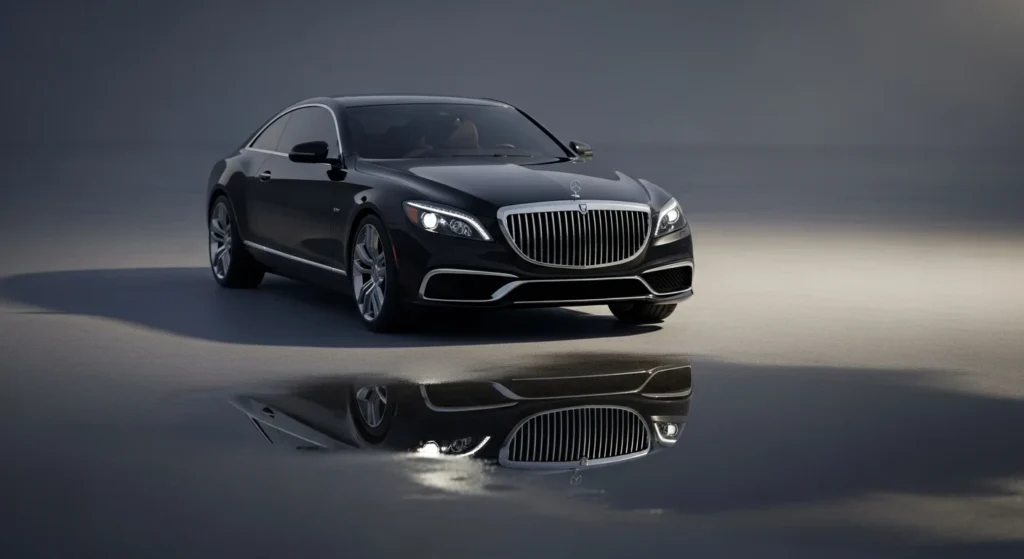
When Power Doesn’t Need to Prove Itself
You press the accelerator.
The car moves forward—smoothly, decisively, without drama.
No lurch.
No roar.
No fight.
That moment often surprises first-time luxury car drivers.
Because modern driving culture tells us that power should feel aggressive.
Luxury cars reject that idea entirely.
And the more you understand why, the more aggression starts to feel like insecurity—not performance.
Aggression vs Authority: A Subtle but Crucial Difference
Aggressive cars demand attention.
Luxury cars command confidence.
Aggression in vehicles usually looks like:
- Sharp throttle response
- Sudden gear changes
- Loud exhaust notes
- Twitchy steering
Luxury cars intentionally soften all of this.
Not because they can’t be aggressive—but because aggression creates tension, fatigue, and unpredictability.
Luxury prioritizes authority:
- Calm responses
- Predictable behavior
- Controlled power delivery
Authority lasts longer than excitement.
The Core Luxury Philosophy: Reduce Friction, Not Add Drama
Luxury car engineers design around a central principle:
“The car should never pressure the driver.”
Aggression pressures the human nervous system.
Luxury avoids that by:
- Smoothing responses
- Filtering sharp sensations
- Eliminating unnecessary urgency
Brands like Mercedes-Benz and Lexus consistently emphasize calmness over stimulation.
Luxury isn’t about adrenaline.
It’s about emotional sustainability.
Throttle Tuning: Why Luxury Power Feels Calm
Aggressive cars deliver power abruptly.
Luxury cars deliver it progressively.
This means:
- Throttle mapping is linear
- Acceleration builds smoothly
- Torque arrives early but gently
The result?
- Less head toss
- More passenger comfort
- Better traction control
In luxury cars, power is always available—but rarely announced.
That restraint is intentional.
Transmission Logic: Why Luxury Cars Don’t “Kick Down” Hard
Aggressive transmissions hunt for gears.
Luxury transmissions anticipate instead.
They are programmed to:
- Avoid abrupt downshifts
- Maintain momentum smoothly
- Reduce cabin disturbance
This is especially noticeable in traffic, where aggressive cars feel jerky and impatient.
Luxury cars feel composed—even when delayed.
Because impatience isn’t luxurious.
Steering and Suspension: Calm Inputs, Calm Outcomes
Aggressive steering reacts instantly.
Luxury steering responds deliberately.
Luxury tuning emphasizes:
- Gentle resistance
- Progressive feedback
- Stability over sharpness
Suspension follows the same logic:
- Absorb first, correct second
- Settle quickly after disturbances
- Avoid harsh rebound
In vehicles from BMW and Audi, this balance creates confidence instead of tension.
The car doesn’t flinch.
Neither do you.
Design Language: Why Luxury Cars Don’t Look Angry
Aggression shows up visually too.
Sharp creases.
Fake vents.
Exaggerated grilles.
Luxury design avoids these because:
- Visual aggression ages quickly
- Loud styling attracts attention, not respect
- Calm proportions signal permanence
Look at cars from Bentley or Rolls-Royce.
They occupy space confidently.
The Psychology Behind Avoiding Aggression
Aggressive environments increase:
- Stress
- Reaction errors
- Fatigue
Luxury cars are designed to lower cognitive load.
Calm driving environments:
- Improve focus
- Reduce mistakes
- Encourage smoother driving behavior
This isn’t just comfort—it’s performance over time.
A calm driver is a better driver.
Luxury vs Aggressive Cars: A Clear Comparison
| Aspect | Luxury Cars | Aggressive / Sporty Cars |
|---|---|---|
| Throttle Response | Progressive | Abrupt |
| Steering Feel | Weighted, calm | Sharp, reactive |
| Cabin Sound | Refined | Loud |
| Driver Emotion | Confidence | Excitement |
| Long-Term Fatigue | Low | Higher |
Aggression excites briefly.
Why This Matters Today
Modern roads are:
- Crowded
- Distracting
- Emotionally demanding
Aggressive cars amplify stress.
Luxury cars absorb it.
Avoiding aggression isn’t about softness—it’s about adapting to reality.
Luxury engineering acknowledges how people actually drive.
Common Mistakes Buyers Make
Many buyers misunderstand luxury cars because they:
- Expect instant excitement
- Confuse aggression with performance
- Test-drive too briefly
Luxury reveals itself in traffic, long drives, and bad roads—not empty highways.
If a car feels “too calm,” it may be doing its job perfectly.
Hidden Tip: How to Evaluate Calmness Correctly
When test-driving:
- Drive in traffic
- Take uneven roads
- Sit in silence for a few minutes
- Notice your breathing and posture
If you feel less tense afterward, the car is working with you.
Actionable Steps for Buyers
If you value calm over chaos:
- Prioritize smooth throttle response
- Test gear changes in traffic
- Avoid overly aggressive drive modes
- Focus on fatigue, not excitement
Luxury isn’t about winning a sprint.
It’s about finishing the journey well.
Key Takeaways
- Luxury cars avoid aggression by design
- Calm signals confidence, not weakness
- Smooth responses reduce fatigue and stress
- Aggression ages poorly—calm endures
- True luxury supports the driver emotionally
Frequently Asked Questions
1. Are luxury cars less fun because they avoid aggression?
No. They separate enjoyment from stress.
2. Why do aggressive cars feel tiring over time?
Because constant stimulation exhausts the nervous system.
3. Can luxury cars still be fast?
Absolutely. They just don’t dramatize speed.
4. Is calmness safer than aggression?
Calm driving environments support better decision-making.
5. Why does calm feel more expensive?
Because restraint requires confidence—and careful engineering.
Conclusion: Calm Is the New Power
Luxury cars don’t compete.
They don’t rush.
They don’t demand validation.
They move with confidence—because they know exactly what they are.
Avoiding aggression isn’t a compromise.
It’s the clearest signal that nothing needs to be proven.
Disclaimer: This article is for general informational purposes only and reflects broad automotive design principles rather than specific vehicle recommendations.