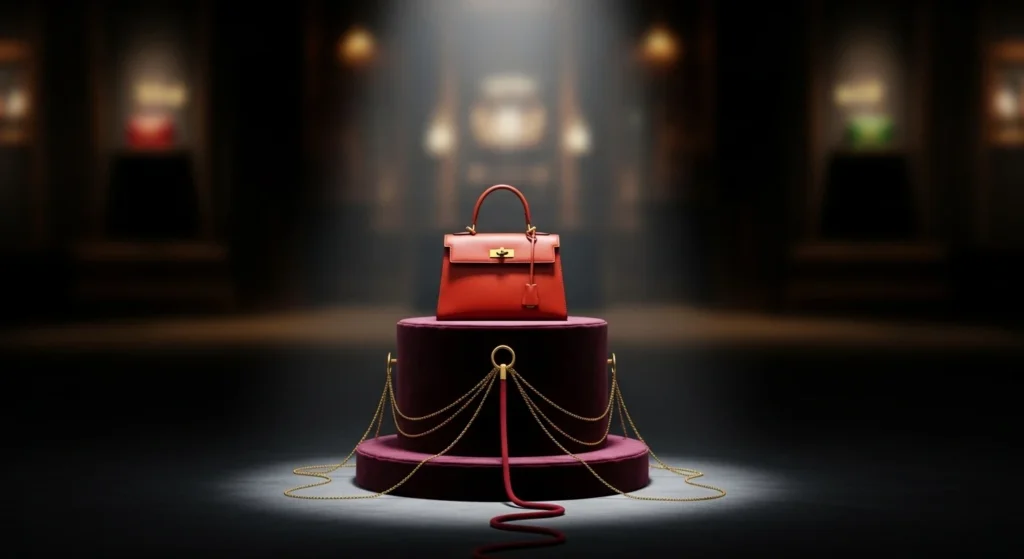
The Feeling of “Almost” That Luxury Creates
You want something.
You check.
It’s unavailable.
There’s a waitlist.
Or a quiet “not right now.”
Oddly, you want it more.
That reaction isn’t frustration—it’s fascination.
Luxury brands don’t limit availability because they can’t meet demand.
They limit availability because meeting all demand would destroy what they sell.
Luxury doesn’t trade in products alone.
It trades in meaning.
Why Availability Is a Strategic Choice, Not a Constraint
In most industries, availability equals success.
More stores.
More units.
More reach.
Luxury flips that logic.
Availability, when unchecked, creates familiarity.
Familiarity erodes distinction.
Luxury brands intentionally decide:
- Where products are sold
- How many exist
- Who gets access
- When availability expands—if ever
This isn’t inefficiency.
It’s discipline.
The Psychology: Why Limited Access Feels Valuable
Humans don’t assign value in isolation.
We measure value through contrast and restriction.
Limited availability triggers:
- Anticipation instead of impulse
- Respect instead of convenience
- Emotional investment instead of casual interest
When something is always available, the brain postpones desire.
When something is scarce, the brain prioritizes it.
Luxury brands design for prioritization.
Real-World Examples of Controlled Availability
Some of the most respected luxury houses are famous for not being everywhere.
- Hermès produces fewer bags than demand requires, maintaining waitlists by design
- Rolex restricts dealer inventory globally, even during demand surges
- Ferrari caps production to protect brand equity and ownership pride
These brands don’t apologize for limited availability.
They expect it to be understood.
Availability vs Accessibility: A Crucial Difference
Luxury brands are visible—but not accessible.
That distinction matters.
- Visibility builds aspiration
- Accessibility satisfies demand
Luxury chooses aspiration over saturation.
If luxury were easily accessible:
- Ownership would feel casual
- Status would feel diluted
- Desire would fade quickly
Limiting availability keeps the distance that fuels desire.
Comparison Table: Limited vs Unlimited Availability
| Aspect | Limited Availability (Luxury) | Unlimited Availability |
|---|---|---|
| Emotional Impact | High | Low |
| Brand Desire | Sustained | Short-lived |
| Pricing Power | Strong | Discount-prone |
| Customer Loyalty | Deep | Transactional |
| Brand Equity | Compounding | Eroding |
Luxury isn’t optimized for convenience.
It’s optimized for longevity.
Why This Matters Today
We live in a world of instant access.
- Same-day delivery
- Endless choice
- Constant exposure
Availability is no longer special.
Restraint is.
Luxury brands that limit access feel calmer, more confident, and more trustworthy in an overstimulated environment.
Calm has become premium.
The Hidden Benefit: Limited Availability Protects Quality
Scaling availability often means scaling compromise.
Luxury brands avoid this by:
- Preserving craftsmanship standards
- Protecting material sourcing
- Allowing time-intensive processes
- Maintaining consistency across decades
Quality in luxury is not negotiable.
Limiting availability ensures standards don’t bend under pressure.
Common Mistakes Brands Make When Expanding Availability
Even luxury brands stumble here.
Mistakes to avoid:
- Expanding distribution too quickly
- Launching excessive “limited editions”
- Over-supplying popular models
- Chasing short-term revenue spikes
- Explaining scarcity instead of embodying it
Luxury should never feel defensive about limits.
Limits are the message.
Why Limited Availability Protects the Customer
This strategy isn’t exclusion for exclusion’s sake.
It benefits the buyer too.
Limited availability ensures:
- Ownership feels earned
- Products retain emotional value
- Resale markets remain strong
- Brand trust stays intact
Luxury buyers don’t want reassurance through discounts.
They want reassurance through restraint.
Actionable Lessons for Brands (Any Size)
You don’t need to be a global luxury house to apply this principle.
Smart ways to limit availability:
- Control distribution channels
- Produce intentionally, not reactively
- Resist pressure to “meet all demand”
- Prioritize long-term brand health
- Let waiting be part of the experience
Growth that feels calm lasts longer.
The Emotional Role of Waiting
Waiting is not a flaw in luxury.
It’s a feature.
Waiting builds:
- Anticipation
- Emotional attachment
- Personal validation
When luxury brands allow waiting, they communicate confidence.
Confidence is magnetic.
Key Takeaways
- Luxury brands limit availability to protect meaning
- Scarcity fuels desire more than promotion
- Over-availability erodes brand power
- Restraint signals confidence and authority
- Long-term value depends on controlled access
Frequently Asked Questions (FAQ)
1. Is limited availability just artificial scarcity?
No. True luxury scarcity is structural—rooted in quality, time, and discipline.
2. Doesn’t limited availability frustrate customers?
When done correctly, it creates anticipation—not resentment.
3. Can smaller brands use this strategy?
Yes. Intentional restraint often works best at smaller scales.
4. Why don’t luxury brands simply raise prices instead?
Price without scarcity feels exploitative. Scarcity makes price feel justified.
5. What happens when luxury brands stop limiting availability?
They may grow briefly, but long-term desire and trust decline.
Conclusion: Luxury Grows by Saying “Not Yet”
Luxury isn’t defined by how many people can buy it.
It’s defined by how carefully access is granted.
By limiting availability, luxury brands protect:
- Desire
- Quality
- Trust
- Longevity
In a world obsessed with more,
luxury survives by choosing less—with intention.
Disclaimer: This article is for general informational purposes and reflects widely observed branding and consumer behavior principles.