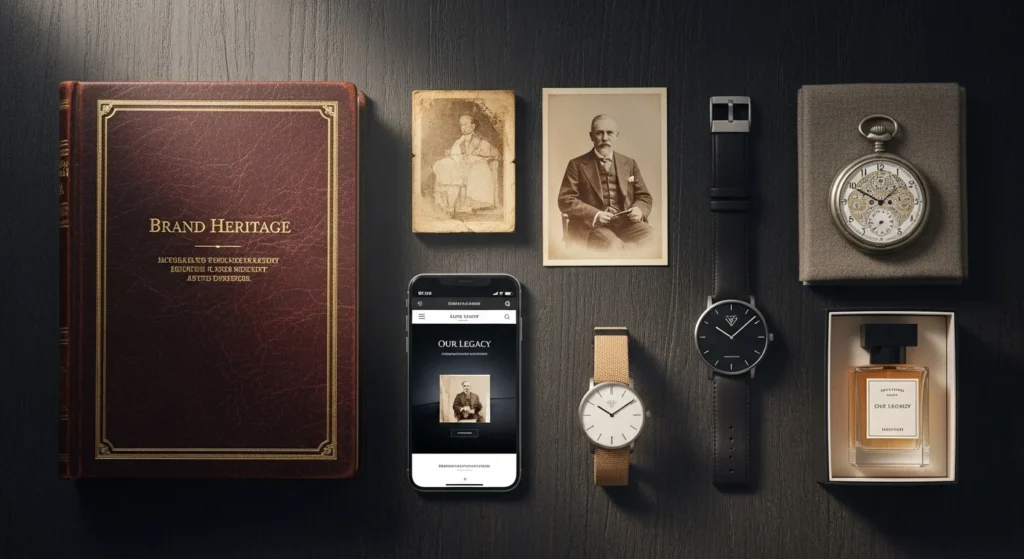
The Past That Makes Luxury Feel Permanent
Luxury brands talk about the future—but they sell the past.
Old workshops.
Founding dates.
Stories passed down, not reinvented.
This isn’t nostalgia for its own sake.
Luxury brands invest in heritage because history creates trust faster than innovation ever could.
When everything feels temporary, heritage makes luxury feel permanent.
And permanence is priceless.
Why Heritage Matters More in Luxury Than Any Other Industry
Most industries compete on speed.
Luxury competes on continuity.
A brand with heritage signals:
- Stability
- Mastery
- Cultural legitimacy
- Long-term commitment
Luxury buyers aren’t just purchasing a product—they’re buying into a lineage.
Heritage reassures customers that the brand existed before them and will exist after them.
That reassurance reduces risk and increases emotional comfort.
Heritage Is Trust, Not Decoration
Luxury heritage isn’t about old photos or dusty archives.
It’s about credibility.
When a brand can point to decades—or centuries—of craftsmanship, it quietly answers key questions:
- Will this last?
- Is this authentic?
- Is this worth preserving?
Heritage removes doubt.
And in luxury, removing doubt is more powerful than adding features.
The Psychology: Why Age Equals Authority
Human psychology equates longevity with reliability.
If something has survived:
- Wars
- Economic crashes
- Cultural shifts
It must be doing something right.
Luxury brands leverage this instinct.
Heritage tells the brain:
“This has been chosen many times before.”
That shared history makes today’s buyer feel part of a long, respected chain—not a risky experiment.
Real-World Examples of Heritage-Driven Luxury
Some of the most powerful luxury brands are built almost entirely on heritage:
- Hermès emphasizes its origins in craftsmanship and equestrian culture
- Rolex anchors its authority in decades of precision and endurance
- Louis Vuitton continually references its travel heritage and trunk-making roots
These brands don’t just sell products.
They sell continuity.
Heritage vs Trend: Why Luxury Avoids Reinvention
Trends create excitement.
Heritage creates confidence.
Luxury brands are cautious with reinvention because too much change:
- Weakens identity
- Confuses loyal customers
- Erodes trust
That’s why luxury evolves slowly.
Small refinements.
Subtle updates.
Familiar foundations.
Heritage acts as an anchor, ensuring innovation never feels reckless.
How Heritage Justifies Premium Pricing
Luxury pricing often raises eyebrows.
Heritage helps justify it—without explanation.
When a brand carries history, price feels less like a number and more like:
- Preservation
- Stewardship
- Continuation
Customers aren’t paying only for materials.
They’re supporting a tradition they want to see survive.
That emotional framing makes high prices feel responsible—not indulgent.
Heritage vs Hype: A Clear Comparison
| Aspect | Heritage-Driven Luxury | Hype-Driven Brands |
|---|---|---|
| Time horizon | Long-term | Short-term |
| Trust | Earned over decades | Borrowed from attention |
| Customer loyalty | Deep | Fragile |
| Price resilience | Strong | Volatile |
| Cultural relevance | Enduring | Temporary |
Luxury chooses heritage because hype fades.
Why Heritage Feels Especially Powerful Today
Modern life is fast, digital, and disposable.
Luxury offers contrast.
Heritage provides:
- A sense of grounding
- Emotional stability
- Cultural depth
In a world of constant updates, something unchanged feels valuable.
Heritage makes luxury feel like an anchor—not a trend.
Common Mistakes Brands Make With Heritage
Heritage can backfire if handled poorly.
Luxury brands avoid these mistakes:
- Faking history
- Over-romanticizing the past
- Using heritage as nostalgia, not foundation
- Ignoring modern relevance
True heritage is lived, not staged.
It must connect past values to present expectations seamlessly.
Hidden Ways Luxury Brands Protect Heritage
Heritage isn’t just marketing—it’s operational.
Luxury brands protect it by:
- Training artisans for years
- Limiting production to preserve standards
- Maintaining original workshops
- Archiving designs and techniques
- Passing knowledge internally, not outsourcing it
These invisible investments keep heritage real.
Why This Matters Today (And Long Into the Future)
As AI, automation, and speed dominate modern life, human craftsmanship becomes rarer.
Luxury brands investing in heritage are protecting:
- Human skill
- Cultural memory
- Meaningful work
That protection increases value over time.
The older the brand becomes, the stronger its position—if heritage is preserved with integrity.
Actionable Insights for Premium and Aspiring Brands
If you’re building a high-end or aspirational brand, learn from luxury heritage strategy:
- Identify your core story and protect it
- Evolve slowly and intentionally
- Invest in skills, not shortcuts
- Document your journey from the start
- Let time—not trends—build authority
You can’t buy heritage later.
You have to earn it early.
Key Takeaways
- Heritage builds trust faster than innovation
- Longevity signals authority and stability
- Luxury evolves slowly to protect identity
- Heritage justifies premium pricing naturally
- Timeless brands outperform trendy ones
Frequently Asked Questions (FAQ)
1. Can new luxury brands build heritage?
Yes—but it requires patience, consistency, and long-term thinking.
2. Is heritage more important than innovation in luxury?
They must coexist, but heritage always leads.
3. Do consumers really care about brand history?
Yes—especially when making high-stakes, emotional purchases.
4. Can heritage feel outdated?
Only if brands fail to connect it to modern life.
5. Will heritage still matter in the future?
Even more, as authenticity becomes rarer.
Conclusion: Time Is Luxury’s Greatest Ally
Luxury brands invest in heritage because time does what marketing never can.
It builds trust.
It removes doubt.
It creates meaning.
In a fast world, luxury wins by slowing down—and letting history speak.
Disclaimer: This article is for informational and educational purposes only and reflects general observations about luxury branding and consumer behavior.