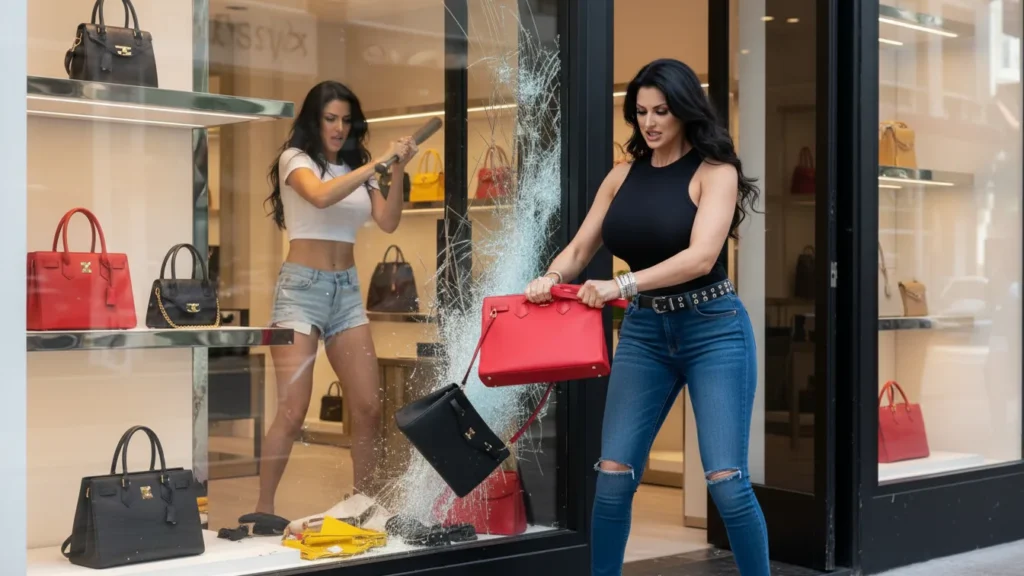
When Destruction Makes More Sense Than Selling
At first glance, it feels shocking.
Perfectly usable bags.
Unworn clothing.
Pristine accessories.
Destroyed.
In a world where sustainability is increasingly important and overproduction is under scrutiny, the idea that luxury brands deliberately destroy unsold products feels almost immoral.
But luxury doesn’t operate on moral instinct.
It operates on meaning.
For luxury brands, selling an item cheaply can be far more damaging than not selling it at all.
This article explores why luxury brands destroy unsold products, what psychology drives this decision, and why—despite the backlash—it continues to happen.
The Core Principle: Luxury Is a Perception System
Luxury is not built primarily on utility.
It is built on:
- Perception
- Consistency
- Scarcity
- Trust over time
Once a luxury item enters the discount ecosystem, it stops being rare. It becomes comparable.
Comparison is fatal to luxury.
Destruction, paradoxically, preserves value by preventing comparison.
Why Discounting Is More Dangerous Than Waste
To understand destruction, you must understand the alternative.
Discounting creates three immediate problems:
- It publicly lowers the brand’s perceived worth
- It trains customers to wait instead of commit
- It makes full-price buyers feel misled
Once consumers believe a luxury item will eventually be cheaper, the real price becomes fictional.
Luxury brands choose destruction to protect the truthfulness of their pricing.
Scarcity Must Be Real, Not Performative
Luxury scarcity isn’t about marketing slogans.
It’s about controlling availability at every stage.
Brands like Hermès and Rolex are famous for limited supply, long waitlists, and strict distribution.
Unsold inventory threatens this system.
If excess products leak into outlets, gray markets, or resellers, scarcity collapses.
Destruction closes the loop.
The Secondary Market Problem Most People Miss
One of the biggest risks of unsold luxury inventory is resale.
Discounted items often:
- End up on unauthorized platforms
- Become price benchmarks online
- Undermine resale value for existing customers
Luxury brands depend heavily on strong resale perception—even if they don’t participate in resale directly.
If resale prices fall, desirability follows.
Destroying inventory protects not just retail prices, but the entire ecosystem.
Case Study: Louis Vuitton’s Hard Line
Louis Vuitton has long been associated with destroying unsold goods rather than discounting them.
The brand’s logic is simple:
- A bag seen at half price is no longer aspirational
- Accessibility dilutes meaning
- Excess availability erodes status
Luxury is not democratic by design.
That discomfort is intentional.
Luxury vs Mass Market: Two Different Economic Logics
| Aspect | Luxury Brands | Mass-Market Brands |
|---|---|---|
| Goal | Preserve meaning | Maximize volume |
| Unsold Inventory | Destroy or recycle | Discount or liquidate |
| Price Role | Signal of worth | Sales driver |
| Customer Training | Commit or waitlist | Wait for deals |
| Risk Tolerance | Long-term | Short-term |
Judging luxury by mass-market logic will always feel wrong—because it is wrong.
Why Donations Aren’t the Simple Solution
A common question arises:
“Why not donate unsold luxury items?”
Because donation creates:
- Uncontrolled distribution
- Public visibility at zero price
- Loss of pricing authority
Once a luxury product is seen as free, it cannot be unseen.
Some brands now recycle materials privately—but visibility remains tightly controlled.
The Psychological Contract With Luxury Customers
Luxury customers are not just buying objects.
They are buying:
- Assurance that the brand will protect their choice
- Confidence that today’s purchase won’t feel foolish tomorrow
- Belonging to a stable hierarchy of value
Destroying unsold goods reassures existing customers that their purchase retains meaning.
That reassurance is priceless.
The Sustainability Backlash—and the Shift Happening Quietly
Public pressure has forced change.
Many luxury brands are now:
- Recycling materials internally
- Upcycling fabrics
- Reducing overproduction
- Destroying less, but more discreetly
What hasn’t changed is the principle.
Luxury will still choose invisibility over dilution.
Common Misconceptions About Luxury Destruction
Mistake 1: “It’s just greed.”
In reality, it’s long-term brand preservation.
Mistake 2: “Luxury brands don’t care.”
They care deeply—about perception stability.
Mistake 3: “This will stop soon.”
It may evolve, but it won’t disappear.
Why This Matters Today
In a world flooded with excess, luxury survives by refusing abundance.
In markets driven by speed, luxury protects slowness.
And in economies obsessed with optimization, luxury still chooses restraint—even when it looks irrational.
That restraint is the product.
Key Takeaways
- Luxury brands destroy unsold products to protect price integrity
- Discounts damage trust more than waste damages optics
- Scarcity must be enforced structurally
- Resale value is critical to brand perception
- Luxury economics prioritize meaning over volume
Frequently Asked Questions
1. Do all luxury brands destroy unsold products?
Not all, but many do in some form—often privately or through recycling.
2. Is destroying inventory legal?
Yes, though regulations vary by country and are tightening.
3. Does this hurt sustainability efforts?
It has, which is why brands are shifting toward less visible recycling.
4. Why not sell to outlets?
Outlets train customers to wait and weaken brand authority.
5. Can a luxury brand survive discounting?
Rarely. Most lose status permanently once price integrity breaks.
Conclusion: The Logic That Feels Wrong—but Works
Destroying unsold luxury products feels counterintuitive.
But luxury isn’t built on efficiency.
It’s built on belief.
When belief weakens, no amount of inventory matters.
And that is why, for luxury brands, destruction can be safer than selling.
Disclaimer: This article discusses branding and consumer behavior for educational purposes and does not assess individual company practices or environmental impact in detail.
Pingback: Why Waiting Lists Increase Demand (The Psychology Brands Quietly Use)