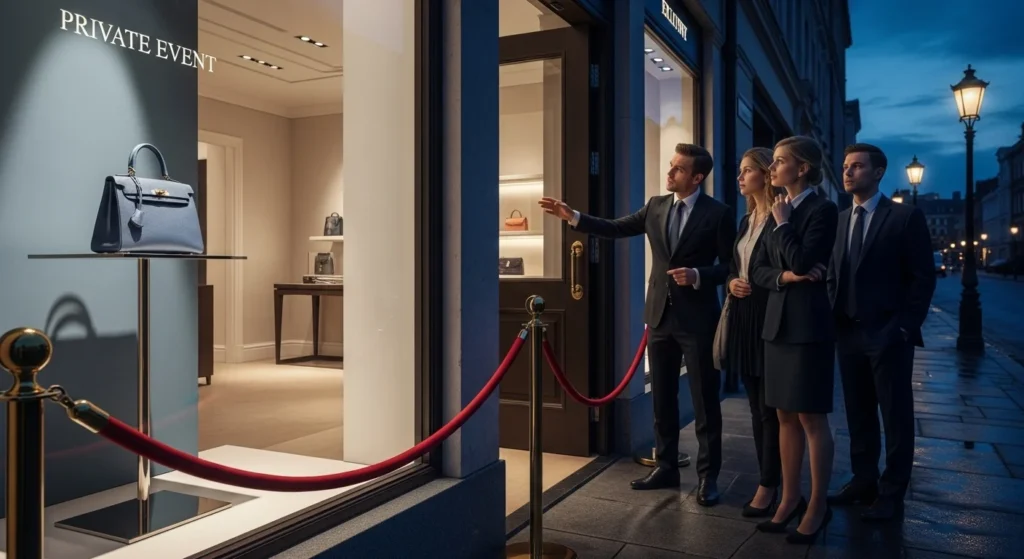
The Rejection That Makes Luxury More Desirable
Imagine walking into a luxury store with money ready.
And still being told no.
No waiting list.
No stock.
No guarantee.
In most industries, that would be bad business.
In luxury, it’s intentional.
Luxury brands don’t just control what they sell or how much they charge.
They carefully control who gets to buy—and sometimes, who doesn’t.
This isn’t arrogance.
It’s strategy.
And it’s one of the most misunderstood forces behind luxury’s enduring power.
Why Selling to Everyone Would Destroy Luxury
At its core, luxury is not about products.
It’s about signals.
Signals of:
- Taste
- Status
- Cultural understanding
- Belonging
These signals only work when they’re selective.
If everyone can buy the same thing, the signal collapses.
That’s why luxury brands avoid mass accessibility—even when demand is high.
Growth is easy.
Preserving meaning is hard.
The Difference Between High Price and High Control
Many people assume luxury is defined by price.
It isn’t.
Plenty of expensive brands have failed because they sold to everyone willing to pay.
True luxury combines:
- High price
- Controlled access
- Cultural fit
Price filters by wealth.
Control filters by alignment.
Luxury brands care deeply about who represents them—because customers become walking brand symbols.
The Psychology Behind Controlled Buying
Human desire is shaped by restriction.
When access is limited, the brain assigns higher value.
But luxury goes further than scarcity.
It uses selective acceptance, which triggers:
- Anticipation
- Validation
- Emotional investment
- Long-term loyalty
Being chosen feels different from simply buying.
That emotional difference is what luxury monetizes.
How Luxury Brands Decide Who Gets Access
Luxury brands rarely publish their rules.
But patterns are clear.
They look at:
- Purchase history
- Relationship longevity
- Brand understanding
- Behavior and attitude
- Cultural alignment
This is why two people with equal money can receive very different treatment.
Luxury rewards commitment, not transactions.
Real-World Examples of Controlled Buying
Some of the most iconic luxury brands are famous for this practice:
- Hermès quietly prioritizes long-term clients over first-time buyers
- Rolex allocates popular models based on dealer relationships
- Chanel limits availability to protect brand integrity
These brands don’t chase customers.
Customers chase them.
Why Waiting Lists Are a Feature, Not a Problem
In most industries, waiting lists signal inefficiency.
In luxury, they signal:
- Demand exceeds access
- The product is worth waiting for
- Ownership requires patience
Waiting transforms buying into a journey.
By the time a customer receives the product, desire has deepened—and so has emotional attachment.
That attachment protects brand loyalty long after purchase.
Control vs Accessibility: A Comparison Table
| Aspect | Luxury Brands | Mass/Premium Brands |
|---|---|---|
| Access | Selective | Open |
| Customer role | Brand representative | End user |
| Growth strategy | Slow, protected | Fast, expansive |
| Emotional trigger | Validation | Convenience |
| Long-term value | High | Often diluted |
This difference explains why luxury ages better than hype-driven brands.
Why Luxury Brands Sometimes Say No to Money
Saying no is uncomfortable.
But for luxury brands, it’s necessary.
They refuse:
- Customers who flip products for resale
- Buyers who chase trends, not values
- Overexposure in certain markets
- Distribution that cheapens perception
Short-term revenue is sacrificed for long-term equity.
That discipline is rare—and powerful.
The Hidden Risk of Selling Too Much
Luxury history is filled with cautionary tales.
Brands that expanded too fast often faced:
- Brand dilution
- Loss of cultural relevance
- Falling resale values
- Declining loyalty
Once exclusivity is lost, it’s almost impossible to rebuild.
That’s why modern luxury prefers controlled scarcity over explosive growth.
Why This Matters Today (And Beyond)
In a world of instant access and endless choice, control has become more valuable than availability.
Luxury brands understand something crucial:
When everything is easy to buy, meaning disappears.
Control restores:
- Desire
- Patience
- Emotional weight
As consumers grow more discerning, brands that protect their boundaries will outlast those that don’t.
Common Mistakes Consumers Make About Luxury Access
Many buyers misinterpret controlled access.
They assume:
- It’s personal rejection
- It’s about arrogance
- It’s unfair
In reality, it’s about consistency.
Luxury brands aren’t judging people.
They’re protecting the story they tell the world.
Understanding that changes the entire experience.
Actionable Insights: Navigating Luxury the Right Way
If you want access—not just ownership—keep this in mind:
- Build long-term relationships, not one-off purchases
- Show patience rather than pressure
- Understand brand history and values
- Buy what aligns with you—not what’s hyped
- Respect the process
Luxury responds to respect.
Key Takeaways
- Luxury brands control who buys to protect meaning
- Price alone doesn’t define luxury—access does
- Selective buying builds emotional investment
- Waiting increases desire and loyalty
- Control preserves long-term brand value
Frequently Asked Questions (FAQ)
1. Is controlling buyers unfair?
It can feel that way, but it’s a strategic choice to protect brand integrity.
2. Do luxury brands lose money by limiting buyers?
Sometimes short term—but they gain long-term value and stability.
3. Can anyone eventually buy luxury items?
Often yes, but access usually comes with time, alignment, and trust.
4. Is this strategy only for ultra-luxury brands?
Mostly, but many premium brands are adopting similar principles.
5. Will luxury ever become fully accessible?
Unlikely—because accessibility erodes what luxury represents.
Conclusion: Control Is the Price of Meaning
Luxury isn’t about exclusion for its own sake.
It’s about protection.
By controlling who buys, luxury brands preserve desire, trust, and cultural power—things no discount can replace.
In a world that sells to everyone, luxury endures by choosing carefully.
Disclaimer: This article is for informational and educational purposes only and reflects general observations about luxury branding and consumer behavior.