Luxury Isn’t Rare by Accident
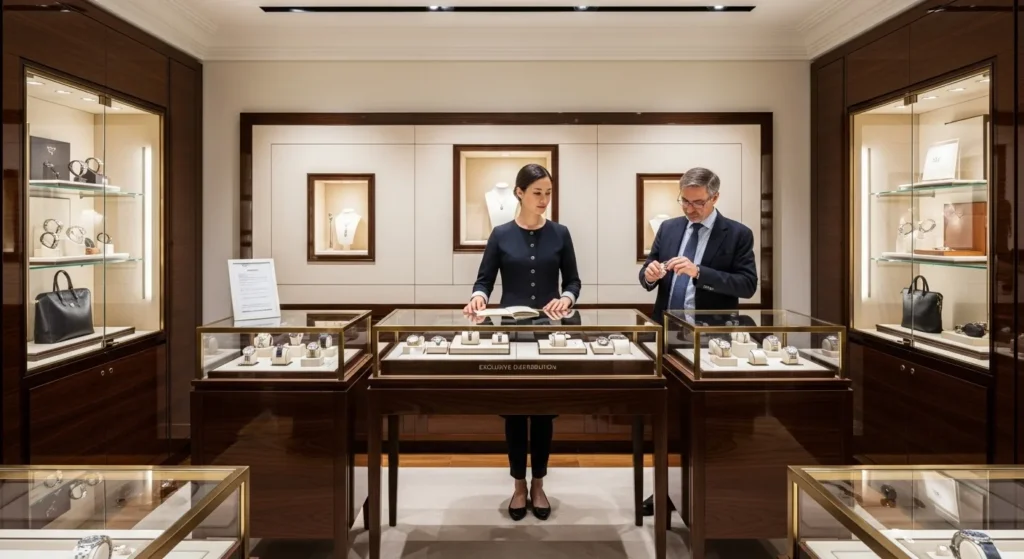
Walk past a luxury boutique and notice something curious.
There’s no shouting.
No discounts screaming from windows.
No urgency pushing you to buy right now.
Instead, there’s silence. Space. Control.
That calm confidence isn’t accidental—it’s engineered.
Luxury brands don’t just sell products. They sell assurance. And one of the most powerful ways they protect that assurance is by controlling where, how, and to whom their products are sold.
This isn’t about arrogance or old-world tradition.
It’s about survival in a world flooded with choice, noise, and imitation.
In this deep dive, you’ll discover why distribution control sits at the heart of luxury—and why brands that lose it often lose everything else.
What “Controlling Distribution” Really Means
Controlled distribution doesn’t mean “selling less.”
It means selling intentionally.
Luxury brands carefully decide:
- Which countries they operate in
- Which cities get boutiques
- Which retailers are authorized
- How many units are released
- Who gets access—and who doesn’t
Unlike mass brands that aim for maximum visibility, luxury brands aim for maximum meaning.
The core idea is simple:
Availability shapes perception.
When something is everywhere, it feels ordinary.
When it’s hard to find, it feels valuable.
Why Luxury Brands Avoid Being Everywhere
At first glance, selling everywhere seems smart.
More stores = more sales, right?
In luxury, the opposite often happens.
Overexposure creates three major risks:
- Price erosion – discounting becomes unavoidable
- Brand dilution – prestige turns into familiarity
- Trust loss – customers question authenticity
Luxury operates on symbolic value, not just functional value.
The moment a brand feels common, desire quietly collapses.
The Psychology of Scarcity: Why Access Feels Like Value
Human brains are wired to value what feels limited.
When access is restricted:
- Desire increases
- Attention sharpens
- Emotional attachment deepens
Luxury brands don’t just sell products—they sell permission.
Buying a luxury item often feels like:
- Being chosen
- Entering a private world
- Crossing an invisible line
That emotional payoff disappears if the product sits next to everything else.
Trust Is Fragile—and Distribution Protects It
Luxury buyers aren’t just paying for craftsmanship.
They’re paying for certainty.
Certainty that:
- The product is authentic
- The service will be exceptional
- The experience will match the price
Uncontrolled distribution introduces risk:
- Counterfeits creep in
- Inconsistent service damages reputation
- Grey markets confuse pricing
By controlling distribution, luxury brands control every touchpoint—from lighting in the store to how a product is handed over.
Real-World Examples of Distribution Control
Hermès
Hermès is famous for not letting customers easily buy its most iconic bags.
- Limited production
- Long waiting periods
- Relationship-based access
This isn’t manipulation—it’s brand protection.
Hermès refuses to let demand dictate behavior.
Louis Vuitton
Louis Vuitton almost never discounts.
Why?
Because discounts teach customers to wait—and waiting kills desire.
Instead:
- LV controls inventory tightly
- Operates mostly through its own stores
- Maintains price consistency globally
Rolex
Rolex limits supply intentionally.
Even with massive demand:
- Authorized dealers receive controlled allocations
- Waiting lists reinforce perceived value
- Scarcity protects resale value
The result?
Rolex watches often appreciate instead of depreciate.
Controlled Distribution vs Mass Distribution
| Aspect | Luxury Brands | Mass Brands |
|---|---|---|
| Availability | Limited, selective | Wide, everywhere |
| Pricing | Stable, protected | Discount-driven |
| Customer Relationship | Personal, long-term | Transactional |
| Brand Perception | Exclusive, aspirational | Accessible, practical |
| Risk Tolerance | Extremely low | High |
Luxury chooses depth over reach.
Why Pricing Power Depends on Distribution
Once a brand loses control over where products are sold, pricing collapses fast.
Here’s why:
- Unauthorized sellers discount to move stock
- Customers expect deals everywhere
- Full-price buyers feel cheated
Luxury pricing isn’t just about margins—it’s about meaning.
Controlled distribution ensures:
- Price integrity
- Fairness across markets
- Long-term brand equity
The Hidden Cost of Selling Too Much, Too Fast
Many brands fall into a dangerous trap:
“Let’s expand distribution to grow revenue.”
Short-term sales may spike.
Long-term damage quietly sets in.
Common consequences:
- Overproduction
- Excess inventory
- Outlet dependency
- Brand fatigue
Luxury brands think in decades, not quarters.
Why This Matters Today More Than Ever
Digital commerce made everything available instantly.
That’s powerful—but also dangerous.
Luxury brands now face:
- Global price transparency
- Faster counterfeiting
- Social media overexposure
Controlling distribution is no longer optional.
It’s the last line of defense against becoming “just another brand.”
Mistakes Luxury Brands Avoid (And Others Should Learn From)
- Chasing volume instead of value
- Discounting to clear stock
- Expanding retail too fast
- Losing control of resale channels
- Ignoring experience consistency
Luxury success often comes from what brands refuse to do.
Actionable Insights for Brands & Entrepreneurs
Even if you’re not a luxury brand, the principles apply.
You can:
- Limit where your product appears
- Choose quality partners over many partners
- Protect pricing consistency
- Design experiences, not just transactions
Scarcity doesn’t mean exclusion—it means intention.
Key Takeaways
- Luxury brands control distribution to protect trust, desire, and pricing power
- Scarcity increases perceived value and emotional connection
- Overexposure is one of the fastest ways to destroy a premium brand
- Distribution is a brand signal—not just a sales channel
- Control today protects relevance tomorrow
Frequently Asked Questions (FAQ)
1. Why don’t luxury brands sell on every online marketplace?
Because uncontrolled platforms increase counterfeiting, discounting, and inconsistent customer experiences.
2. Is scarcity just a marketing trick?
No. It’s a structural strategy that protects craftsmanship, pricing integrity, and long-term brand trust.
3. Do customers actually like limited access?
Yes. Limited access increases perceived value and emotional attachment when done authentically.
4. Can controlled distribution hurt sales?
Short-term, possibly. Long-term, it strengthens brand equity and pricing power.
5. Will luxury brands ever fully open distribution?
Unlikely. Most are becoming more selective, not less.
Conclusion: Control Is the Real Luxury
Luxury isn’t about being seen everywhere.
It’s about being seen in the right places, at the right time, by the right people.
Controlled distribution isn’t restrictive—it’s respectful.
Respect for:
- The product
- The customer
- The brand’s future
In a world of endless access, restraint has become the ultimate signal of power.
And luxury brands know it.
Disclaimer: This article is for educational and informational purposes only and reflects general branding and business principles, not financial or investment advice.
Pingback: Why Luxury Avoids Online Sales — The Real Reason Prestige Brands Still Resist the Internet
Pingback: Why Luxury Controls Supply, Not Demand (And Why That’s Its Greatest Strength)
Pingback: Why Luxury Brands Control Who Buys — The Hidden Strategy That Protects Desire and Status
Pingback: Why Luxury Pricing Is Never Transparent — The Quiet Strategy Behind Perceived Value
Pingback: Inside the $50,000 Medical Memberships the Wealthy Pay For