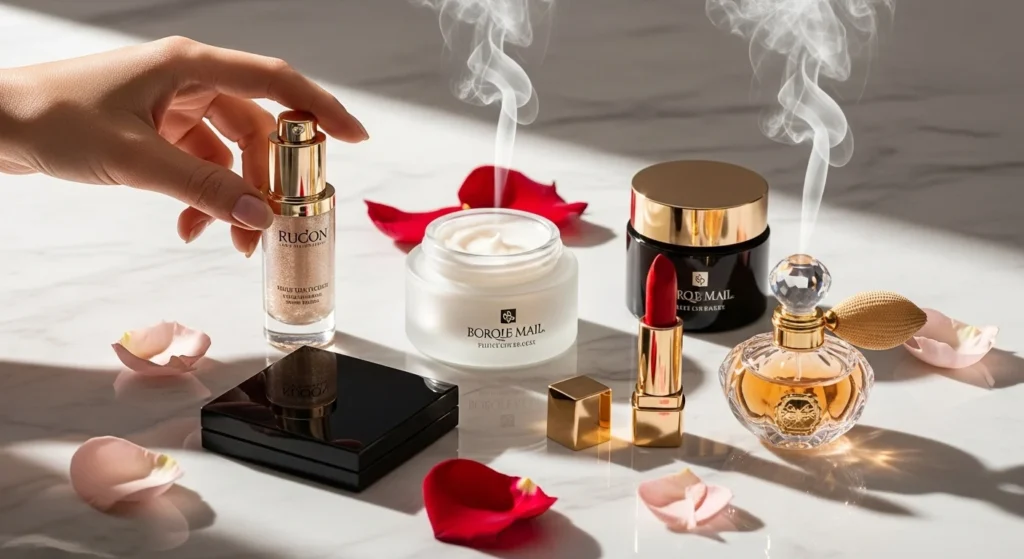
You Don’t Just Use Luxury Beauty — You Feel It
Before you notice a result,
before you read a claim,
before you trust a brand—
You feel luxury beauty.
The weight of the jar.
The glide of the texture.
The quiet scent that fades gently.
The calm that settles in as you apply it.
Luxury beauty is sensory by design, not by accident.
It doesn’t rely on logic alone.
It speaks directly to the nervous system.
And that’s why it feels deeper, more comforting, and more memorable than ordinary beauty.
Once you understand this, luxury beauty stops feeling mysterious—and starts feeling intentional.
Sensory Design Is the Foundation of Luxury Beauty
Mass beauty focuses on function.
Luxury beauty focuses on experience.
That experience is built through the senses because the senses are how humans form trust, comfort, and emotional memory.
Luxury brands understand a core truth:
If beauty feels good to the senses, people commit to it emotionally.
That commitment drives consistency, loyalty, and long-term satisfaction.
This is why brands like Chanel, Dior, and La Mer invest as much in sensory development as they do in formulation science.
Touch: Why Texture Is the First Luxury Signal
Touch is the most immediate sense involved in beauty.
Luxury textures are engineered to feel:
- Smooth without heaviness
- Rich without residue
- Cushioning without clogging
- Slow-melting rather than fast-vanishing
This balance is extremely difficult to achieve.
It requires advanced emulsification, precise ingredient ratios, and repeated sensory testing.
Many luxury formulas are revised dozens of times—not to improve efficacy, but to perfect feel.
Because if it doesn’t feel right, it doesn’t feel luxurious.
Why Slow Absorption Feels More Luxurious
Luxury beauty rarely absorbs instantly.
Instead, it invites:
- Gentle massage
- Deliberate application
- Lingering contact with skin
This slows the routine and calms the mind.
Fast absorption feels efficient.
Slow absorption feels indulgent.
Luxury beauty chooses indulgence because it turns skincare into a moment—not a chore.
Scent: The Emotional Sense Luxury Uses Most Carefully
Scent is deeply tied to memory and emotion.
Luxury beauty uses fragrance not to announce itself—but to comfort the user.
Luxury scents are typically:
- Soft
- Familiar
- Brief
- Designed to fade quickly
A disappearing scent signals restraint and confidence.
It creates intimacy rather than stimulation.
That quiet emotional response is a key reason luxury beauty feels soothing rather than overwhelming.
Sight: Why Luxury Beauty Looks Calm, Not Loud
Luxury beauty rarely uses bright colors or busy designs.
Instead, it favors:
- Neutral palettes
- Clean typography
- Balanced proportions
- Visual simplicity
This visual restraint signals control and intention.
When packaging looks calm, the brain expects the experience to be calm too.
That expectation shapes how the product is perceived from the very first glance.
Sound and Weight: The Subtle Sensory Details
Even sound plays a role.
The soft click of a lid.
The smooth pump of a dispenser.
The gentle resistance when opening a jar.
These cues reassure the brain that care and precision were involved.
Weight matters too.
Heavier packaging subconsciously signals value, stability, and permanence.
These sensory details often go unnoticed—but they are deeply felt.
Comparison Table: Sensory Luxury Beauty vs Functional Beauty
| Element | Luxury Beauty | Mass Beauty |
|---|---|---|
| Primary Focus | Sensory experience | Functional results |
| Texture | Refined, slow-melting | Fast, practical |
| Scent | Subtle, calming | Strong, noticeable |
| Visual Design | Minimal, quiet | Bright, busy |
| Emotional Effect | Calm, pleasure | Efficiency |
| Usage Style | Ritual-based | Task-based |
Luxury beauty isn’t louder.
It’s deeper.
Why Sensory Beauty Creates Stronger Habits
A product only works if it’s used consistently.
Sensory pleasure improves consistency by:
- Making routines enjoyable
- Reducing resistance
- Creating anticipation
- Building emotional attachment
When beauty feels sensory, people don’t forget it.
They crave the experience.
That craving leads to regular use—which is where real, lasting results come from.
Real-Life Example: The End-of-Day Reset
Think about skincare at night.
If it feels clinical or rushed, it’s easy to skip.
If it feels sensory—cool textures, soft scent, gentle application—it becomes a signal to unwind.
Luxury beauty is designed to close the day gently, not aggressively.
That’s why people describe it as comforting, grounding, or even therapeutic.
Common Mistakes People Make About Sensory Beauty
1. “It’s Just Marketing”
Sensory design is behavioral science, not decoration.
2. “Sensation Means Less Effectiveness”
Sensation improves adherence, which improves real-world results.
3. “I Should Feel Results, Not Feelings”
Feelings drive habits. Habits drive outcomes.
Luxury beauty understands this chain.
How to Choose Truly Sensory Luxury Beauty
When evaluating luxury products, ask yourself:
- Does this slow me down in a positive way?
- Do I enjoy the process, not just the outcome?
- Does it calm my senses rather than overwhelm them?
True sensory luxury feels grounding—not flashy.
Why This Matters Today
Modern life is overstimulating.
Screens, notifications, noise, speed.
Luxury beauty offers something increasingly rare:
- Tactile comfort
- Sensory calm
- A moment of presence
In a world of constant input, sensory beauty feels like relief.
That’s why it resonates so deeply—and why it continues to grow.
Key Takeaways
- Luxury beauty is sensory by design, not accident
- Touch, scent, sight, sound, and weight all shape experience
- Sensory pleasure builds emotional trust and consistency
- Ritual matters as much as results
- Feeling good is part of what makes beauty effective
FAQ
Why is luxury beauty so focused on the senses?
Because sensory experience builds trust, comfort, and long-term loyalty.
Does sensory beauty actually work better?
Not chemically—but behaviorally, it’s used more consistently.
Why are luxury scents so subtle?
Subtle scents calm the nervous system instead of overstimulating it.
Can affordable brands create sensory experiences?
To a degree, but deep sensory refinement is costly and complex.
Is sensory luxury beauty worth the price?
For those who value ritual, calm, and emotional connection—yes.
Conclusion: Sensation Is the Language of Luxury
Luxury beauty doesn’t shout to be noticed.
It whispers—and invites you closer.
By engaging the senses, it creates trust before proof, comfort before claims, and loyalty before results.
That’s why luxury beauty isn’t just something you apply.
It’s something you experience—fully, quietly, and deeply.
Disclaimer: This article is for general informational purposes only and reflects industry and consumer psychology insights, not personalized beauty or skincare advice.
Pingback: Why Luxury Beauty Feels Ritualistic — The Deep Human Reason It Calms, Grounds, and Stays With You
Pingback: Why Luxury Beauty Focuses on Sensation — The Hidden Reason It Feels So Addictive, Effective, and Irreplaceable
Pingback: Why Luxury Beauty Feels Different — The Hidden Psychology, Science, and Craft Behind the Experience
Pingback: Why Luxury Beauty Feels Emotional — The Hidden Psychology That Makes It More Than Just Makeup
Pingback: Why Luxury Beauty Is Designed for Feel — The Emotional Science Behind Why It Feels So Right