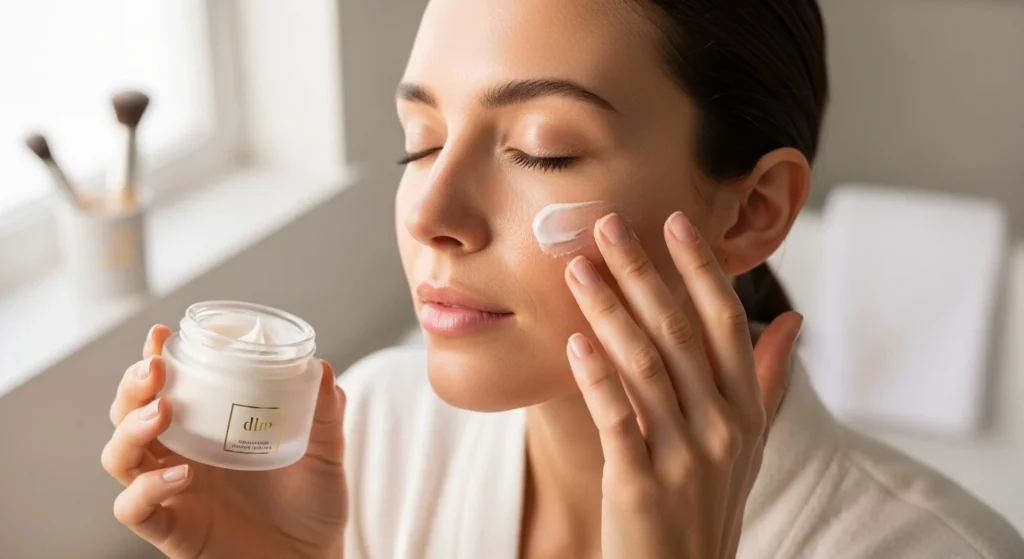
Before You See Results, You Feel Something
Before a luxury beauty product improves your skin,
before you notice glow, firmness, or softness,
something else happens first.
You feel it.
The weight of the jar.
The temperature of the cream.
The way it melts instead of sitting on the surface.
The slow glide instead of drag.
That first contact matters more than most people realize.
Luxury beauty focuses on touch because touch is the fastest way to build trust, calm the brain, and create emotional attachment—long before results can prove anything.
And that focus is no accident.
Touch Is the First Sense to Judge Safety
Touch is the earliest sense humans develop.
Before sight, before language, before logic—we understand the world through physical contact.
From a psychological perspective, touch answers three subconscious questions instantly:
- Is this safe?
- Is this pleasant?
- Do I want to continue?
Luxury beauty is designed to pass all three tests within seconds.
If a product feels harsh, sticky, heavy, or unpredictable, the brain registers discomfort—even if the ingredients are excellent.
Luxury brands know this.
So they engineer textures that feel:
- Predictable
- Controlled
- Gentle
- Intentional
Trust begins at the fingertips.
Why Texture Creates Emotional Memory
Touch doesn’t just inform—it records.
Neuroscience shows that tactile sensations are closely linked to emotional memory. That’s why:
- You remember how silk feels
- You recall the comfort of certain fabrics
- You associate softness with care
Luxury beauty uses this to its advantage.
When a product consistently feels good on the skin, the brain creates a positive loop:
- Touch feels pleasant
- Brain releases calming signals
- Product feels emotionally “safe”
- Loyalty increases
This is why people often repurchase luxury beauty products even before finishing the jar.
They’re not just buying skincare.
They’re buying a feeling they trust.
Why Luxury Beauty Prioritizes “Melt” Over Speed
Mass-market beauty often focuses on speed:
- Fast absorption
- Instant matte finish
- Quick dry-down
Luxury beauty focuses on melt.
Melt is the sensation of a product becoming one with the skin—without friction, residue, or resistance.
This matters because friction signals stress to the nervous system.
Luxury formulations reduce:
- Tugging
- Dragging
- Abrupt absorption
Instead, they encourage slower application, which reinforces ritual and relaxation.
That slower pace isn’t inefficiency.
It’s intentional emotional design.
Touch Turns Routine Into Ritual
There’s a difference between applying a product and experiencing it.
Luxury beauty turns daily care into ritual through tactile cues:
- Creams that warm on contact
- Oils that spread evenly without slipping
- Balms that soften gradually
These textures invite you to slow down.
And when you slow down, your nervous system follows.
That’s why many people describe luxury beauty as:
- “Grounding”
- “Soothing”
- “My quiet moment”
The touch itself becomes part of self-care—not just the outcome.
Comparison Table: Touch in Mass Beauty vs Luxury Beauty
| Aspect | Mass Beauty | Luxury Beauty |
|---|---|---|
| Texture Goal | Fast, functional | Sensory, calming |
| Application Speed | Immediate | Gradual |
| Emotional Response | Neutral or rushed | Comfort and reassurance |
| Skin Interaction | Surface-level | Skin-adaptive |
| Role in Routine | Task | Ritual |
Why Touch Builds Trust Faster Than Claims
Claims require belief.
Touch creates proof.
Before ingredients can work, before time can pass, touch gives immediate feedback:
- This feels controlled
- This feels intentional
- This feels safe
Luxury beauty understands that modern consumers are skeptical of words—but highly sensitive to physical experience.
That’s why luxury brands often say less and focus more on how a product feels.
When touch is right, trust follows naturally.
Why This Matters Today More Than Ever
People are overwhelmed.
Too many products.
Too many claims.
Too much noise.
Touch cuts through all of it.
A product that feels good on the skin:
- Reduces decision fatigue
- Lowers stress
- Creates a sense of control
In uncertain environments, humans gravitate toward sensory reassurance.
Luxury beauty doesn’t just improve skin—it stabilizes emotion.
That’s why tactile experience has become a defining feature of premium beauty.
Common Mistakes When Choosing Luxury Beauty by Touch Alone
Touch matters—but it shouldn’t be the only factor.
Mistake 1: Confusing heaviness with quality
Luxury textures feel refined, not heavy or greasy.
Mistake 2: Assuming thicker means more effective
Some of the most elegant luxury formulas are lightweight but deeply satisfying.
Mistake 3: Ignoring how it feels after 10 minutes
Luxury beauty should feel good during and after application.
Touch should support performance—not mask poor formulation.
How to Evaluate Luxury Beauty Through Touch (Actionable Steps)
Next time you try a luxury product, notice:
- How it feels when first applied
- Whether it encourages slower movement
- If your skin feels calm or reactive afterward
- How your body responds—do you relax or rush?
If touch improves your experience, the product is doing more than skincare.
It’s supporting your nervous system.
Key Takeaways
- Luxury beauty focuses on touch because touch builds trust instantly
- Texture influences emotional safety and memory
- Slower, melting sensations encourage ritual and calm
- Touch often determines long-term loyalty more than claims
- When a product feels good, the brain wants to return
Frequently Asked Questions (FAQ)
1. Does touch really affect how effective skincare feels?
Yes. Touch shapes perception, trust, and willingness to use products consistently.
2. Why do luxury creams feel different from cheaper ones?
They’re formulated for sensory balance—reducing friction, drag, and abrupt absorption.
3. Can texture alone justify a higher price?
Texture contributes to experience and consistency, which affects long-term satisfaction.
4. Is touch more important than ingredients?
Both matter. Touch creates trust; ingredients deliver results.
5. Why do people describe luxury beauty as calming?
Because tactile design can activate relaxation responses in the nervous system.
Conclusion: Luxury Beauty Begins at the Fingertips
Luxury beauty doesn’t start with results.
It starts with contact.
Before logic, before trust, before loyalty—there’s touch.
And when touch feels intentional, controlled, and comforting, everything else becomes easier to believe.
That’s why luxury beauty focuses on touch.
Because when something feels right, the brain lets it stay.
Disclaimer: This article is for general informational purposes and reflects consumer psychology and product experience insights, not personalized advice.