The Feeling You Can’t Quite Explain
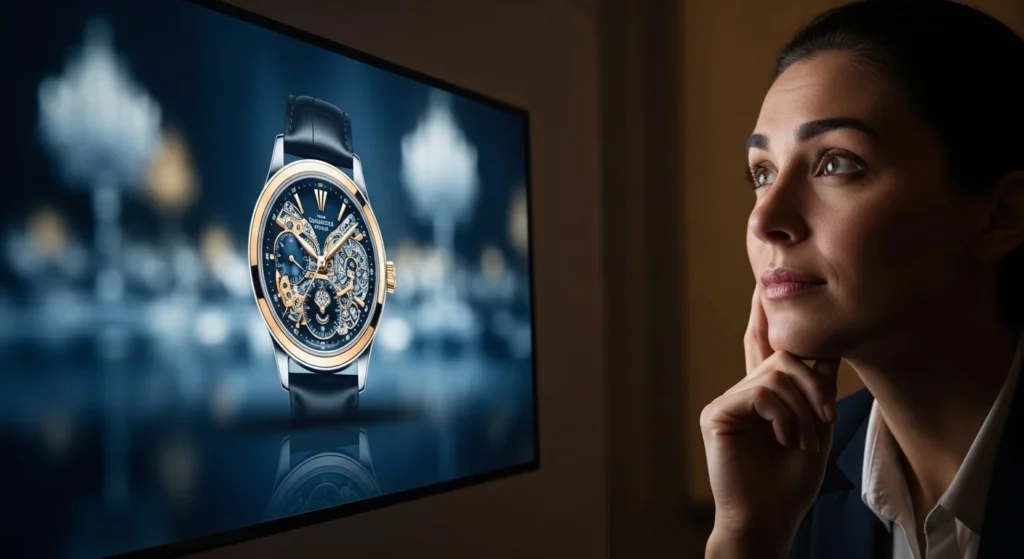
You watch a luxury advertisement.
Nothing is explained.
No features are listed.
No comparisons are made.
And yet—you feel something.
A pause.
A pull.
A quiet sense of desire.
You don’t immediately know why you want it.
You just know that you do.
That emotional reaction isn’t accidental.
It’s the entire point.
Luxury advertising is not designed to convince your mind.
It’s designed to bypass it.
Why Logic Works for Most Brands—but Not Luxury
Most advertising is logical.
It explains:
- What the product does
- Why it’s better
- How it solves a problem
That works for functional products.
Luxury doesn’t solve problems.
It solves identity.
Logic asks, “Is this worth it?”
Luxury asks, “Is this you?”
And identity is never decided rationally.
The Core Truth: Luxury Is an Emotional Category
Luxury belongs to the same psychological space as:
- Art
- Memory
- Belonging
- Aspiration
You don’t rationalize these things.
You feel them.
That’s why luxury advertising prioritizes:
- Mood over message
- Atmosphere over argument
- Story over specification
Luxury brands understand that emotions move faster than thoughts—and last longer.
The Psychology Behind Emotional Luxury Advertising
Neuroscience consistently shows that emotion drives decision-making.
People justify purchases logically after deciding emotionally.
Luxury advertising leans into this truth by activating:
- Desire instead of need
- Belonging instead of utility
- Aspiration instead of comparison
By the time logic enters the conversation, the emotional decision is already made.
Luxury ads don’t explain value.
They suggest meaning.
Why Luxury Ads Feel Like Short Films, Not Commercials
Notice how luxury advertisements unfold.
They often include:
- Slow pacing
- Minimal dialogue
- Cinematic visuals
- Abstract storytelling
That structure mirrors how memories form.
Memories are emotional first.
Details come later.
Luxury advertising wants to be remembered—not analyzed.
That’s why you may forget what happened in the ad, but remember how it made you feel.
Real-World Examples: Emotion Over Explanation
Some of the most iconic luxury campaigns barely mention the product.
- Chanel ads focus on mood, freedom, and femininity—not fabric or fit
- Louis Vuitton emphasizes travel, legacy, and personal journeys
- Hermès highlights craftsmanship as poetry, not process
These brands don’t sell products.
They sell worlds.
Emotional Advertising vs Rational Advertising: A Comparison
| Aspect | Luxury Advertising | Mass-Market Advertising |
|---|---|---|
| Primary Trigger | Emotion | Logic |
| Message Style | Implicit | Explicit |
| Focus | Identity & feeling | Features & benefits |
| Pace | Slow, immersive | Fast, informational |
| Goal | Desire & meaning | Conversion & action |
Luxury doesn’t rush you.
Urgency would break the spell.
Why Silence and Space Matter in Luxury Ads
Luxury ads often feel quiet.
Silence creates:
- Space for projection
- Space for imagination
- Space for personal meaning
When everything is explained, nothing is felt.
Luxury understands restraint as a creative tool.
What’s left unsaid does more work than what’s spoken.
Why This Matters Today
We live in a world of constant stimulation.
- Endless ads
- Loud messaging
- Aggressive persuasion
In that environment, emotional subtlety stands out.
Luxury advertising feels calm in a chaotic world.
Calm signals confidence.
Confidence feels premium.
The less a brand tries to convince you, the more powerful it feels.
The Hidden Reason Emotion Protects Luxury Brands
Emotion is harder to copy than logic.
Anyone can list features.
Anyone can claim superiority.
But emotional resonance?
That takes time, consistency, and cultural depth.
By anchoring advertising in emotion, luxury brands protect themselves from imitation.
You can copy a product.
You can’t copy a feeling.
Common Mistakes Brands Make When Trying to “Feel Luxury”
Many brands try to imitate luxury advertising—and fail.
Mistakes to avoid:
- Using emotional language without emotional depth
- Adding cinematic visuals without a coherent mood
- Over-explaining the story
- Mixing urgency with aspiration
- Chasing trends instead of timelessness
Emotion in luxury must feel earned, not engineered.
How Luxury Brands Design Emotional Impact
Luxury emotion isn’t random.
It’s carefully constructed through:
- Consistent brand symbolism
- Repeated emotional cues
- Cultural references
- Long-term storytelling
- Controlled exposure
Emotion builds through familiarity over time—not instant virality.
Actionable Lessons for Brands (Any Industry)
You don’t need to be a luxury brand to learn from this.
Apply emotional intelligence wisely:
- Focus on how your brand makes people feel
- Reduce explanation where trust exists
- Let customers project themselves into your story
- Design for memory, not clicks
- Value subtlety over volume
Emotion is not softness.
It’s strategy.
Key Takeaways
- Luxury advertising prioritizes emotion over logic
- Identity drives luxury decisions more than features
- Emotional resonance builds long-term desire
- Silence and restraint increase impact
- Feelings are harder to copy than facts
Frequently Asked Questions (FAQ)
1. Why don’t luxury ads explain product features?
Because explanation shifts focus to logic, which weakens emotional desire.
2. Does emotional advertising actually convert?
Yes. Emotion drives initial desire; logic justifies the purchase later.
3. Can emotional advertising work for non-luxury brands?
Yes, when done authentically and aligned with brand values.
4. Why do luxury ads feel slow compared to others?
Slowness signals confidence and gives emotion time to settle.
5. Is emotional advertising manipulative?
Not when it reflects genuine brand values and long-term storytelling.
Conclusion: Luxury Doesn’t Argue—It Resonates
Luxury advertising doesn’t try to win debates.
It creates a feeling that lingers.
By the time logic arrives,
desire is already present.
That’s why luxury ads don’t shout.
They stay with you.
And in a world full of noise,
what stays with you is what truly matters.
Disclaimer: This article is for general informational purposes and reflects widely observed branding, marketing, and consumer behavior principles.