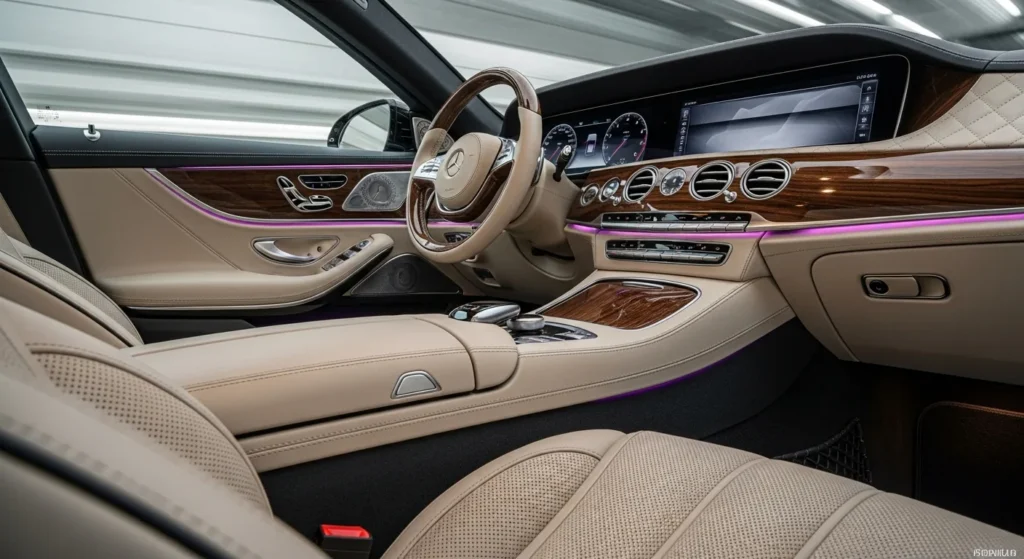
The Moment Speed Stops Mattering
Most drivers remember the first time they floored a fast car.
The acceleration is thrilling.
Your body leans back.
Your pulse jumps.
And then—something unexpected happens.
You adapt.
Within days, the speed feels normal.
Within weeks, it barely registers.
But the interior?
You feel that every single drive.
The seat that supports your spine.
The steering wheel that fits your hands.
The quiet cabin that lowers your stress.
This is why luxury interiors matter more than speed—and why the smartest premium buyers know it.
Speed Is Occasional. Interiors Are Constant.
You rarely use maximum speed.
But you always use the interior.
Consider your daily driving reality:
- Traffic
- Signals
- Rough roads
- Long waits
- Short trips
In those moments, speed is irrelevant.
What matters is:
- How your body feels
- How calm your mind stays
- How much effort driving requires
Luxury interiors are designed for time spent, not performance bragging rights.
Why the Brain Values Comfort Over Performance
Human psychology adapts quickly to extremes.
Fast acceleration triggers excitement—but it fades fast.
Comfort, on the other hand, compounds.
- Physical comfort reduces cognitive load
- Predictable environments lower stress hormones
- Sensory harmony improves mood and focus
Luxury interiors work on these principles.
They don’t overwhelm you.
They support you quietly.
That’s why they feel valuable long after the novelty of speed disappears.
The Interior Is Where Luxury Brands Compete the Hardest
Many cars today are fast.
Electric drivetrains made acceleration accessible.
Even mid-range sedans now feel quick.
Luxury brands shifted their battlefield.
Companies like Mercedes-Benz, BMW, and Lexus invest heavily where others can’t easily follow:
- Materials
- Craftsmanship
- Sensory design
- Human ergonomics
Speed can be copied.
Interior mastery cannot.
Materials Aren’t About Looks — They’re About Feel
Luxury interiors don’t just look premium.
They behave differently.
Examples:
- Leather that stays cool or warm naturally
- Wood that absorbs vibration instead of amplifying it
- Metal controls weighted for tactile confidence
- Fabrics that reduce sound reflection
Each material affects how the cabin sounds, feels, and ages.
This is why a decade-old luxury interior often feels better than a brand-new budget one.
Comparison: Speed vs Interior Value Over Time
| Factor | High Speed | Luxury Interior |
|---|---|---|
| Initial Excitement | Very high | Moderate |
| Long-Term Satisfaction | Drops quickly | Increases |
| Daily Use Impact | Rare | Constant |
| Stress Reduction | Minimal | Significant |
| Resale Perception | Secondary | Primary |
Speed impresses briefly.
Interiors reward you daily.
Seating: The Most Underrated Luxury Feature
Seats are not furniture.
They are interfaces between body and machine.
Luxury seats are engineered with:
- Multi-density foam layers
- Precise lumbar support
- Micro-adjustments for posture
- Pressure distribution mapping
Brands like Volvo famously consult orthopedic specialists—not for medical claims, but for ergonomic precision.
A great seat reduces fatigue more than any horsepower figure ever will.
Silence, Texture, and Light Work Together
Luxury interiors are multi-sensory environments.
They balance:
- Sound (quiet, filtered, controlled)
- Touch (soft, warm, resistance-calibrated)
- Sight (low glare, natural tones, depth)
Ambient lighting is placed to relax, not impress.
Controls resist your fingers just enough to feel intentional.
These details aren’t decorative.
They’re neurological.
Real-Life Example: Why Long Drives Feel Shorter
Drivers who switch to premium interiors often report:
- Less back pain
- Fewer headaches
- Lower irritation in traffic
- Feeling “less drained” after driving
They rarely attribute this to design.
But it’s the interior doing invisible work—absorbing stress before you feel it.
Speed Sells Cars. Interiors Build Loyalty.
Performance specs attract attention.
Interiors create attachment.
This is why:
- Test drives focus on cabins
- Showrooms emphasize touchpoints
- Buyers remember how a car felt, not how fast it was
Luxury buyers don’t chase numbers.
They chase how life feels inside the car.
Common Mistakes People Make When Choosing Luxury Cars
❌ Overvaluing horsepower they’ll never use
❌ Ignoring seat comfort during short test drives
❌ Focusing on screens over materials
❌ Assuming all premium interiors are equal
True luxury reveals itself after weeks—not minutes.
Hidden Tip: Test Interiors Without Driving
When evaluating a luxury car:
- Sit inside with the engine off
- Adjust the seat slowly
- Touch every control
- Notice cabin acoustics
- Observe your posture and breathing
If you relax without moving, the interior is doing its job.
Why This Matters Today
Modern life is physically and mentally demanding.
Cars are no longer just transportation.
They’re:
- Mobile offices
- Recovery spaces
- Quiet transitions between responsibilities
Luxury interiors meet this reality.
Speed doesn’t help you recover.
Comfort does.
Actionable Steps: How to Choose the Right Interior
When buying or upgrading:
- Prioritize seat comfort over acceleration
- Choose materials you enjoy touching daily
- Pay attention to noise at low speeds
- Evaluate visibility and lighting at night
- Think in years, not spec sheets
Your body will thank you long before your ego does.
Key Takeaways
- Speed excites briefly; interiors matter constantly
- Luxury interiors reduce fatigue and stress
- Materials, seating, and sound define true comfort
- Interiors age better than performance specs
- Real luxury improves daily life, not just moments
Frequently Asked Questions
1. Are luxury interiors worth the higher price?
Yes, especially for long-term ownership and daily comfort.
2. Does speed matter at all in luxury cars?
It matters—but it’s secondary to comfort and refinement.
3. Can interior upgrades match factory luxury?
Rarely. Integration and materials are difficult to replicate.
4. Why do premium interiors feel calmer?
They reduce sensory overload through design and materials.
5. Do electric cars change this balance?
They make interiors even more important, since performance is already strong.
Conclusion
Speed impresses strangers.
Interiors serve you.
Luxury cars understand a simple truth:
You don’t live in the engine.
You live inside the cabin.
And the more time you spend there, the more luxury becomes less about how fast you go—and more about how good it feels to arrive.
Disclaimer: This article is for general informational purposes and reflects industry insights, not individual purchasing recommendations.
Pingback: Why Luxury Cars Feel Effortless — The Invisible Engineering That Makes Everything Easier