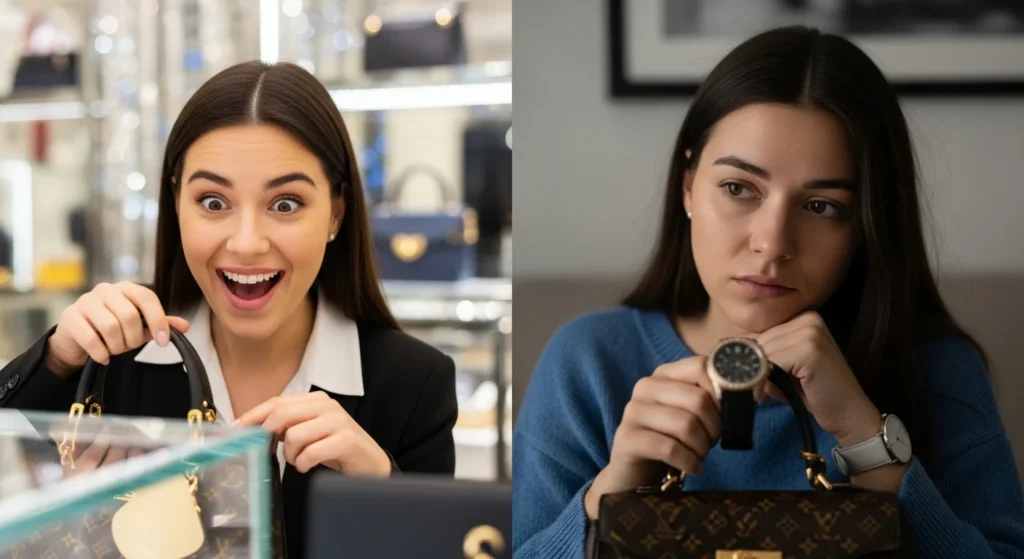
The Moment After the High Fades
For months—sometimes years—you imagine it.
The watch.
The car.
The bag.
The home.
You picture the moment of ownership as a finish line. A rush. A sense of arrival.
And then… you own it.
The excitement fades faster than expected.
The object is real—but the feeling is different.
Not worse. Just unexpected.
This emotional shift after buying luxury is common, rarely discussed, and deeply human. Understanding it doesn’t ruin luxury—it helps you enjoy it without confusion or regret.
The Anticipation Phase Is Emotionally Louder Than Ownership
Before purchase, luxury lives in imagination.
Anticipation triggers:
- Dopamine spikes
- Mental rehearsals
- Social validation fantasies
- A sense of “becoming” someone new
Psychologically, desire is powerful because it’s open-ended.
Once you own the item, that loop closes.
The brain adapts quickly. What once felt extraordinary becomes familiar. This isn’t a flaw—it’s hedonic adaptation, a well-documented psychological effect.
Luxury doesn’t disappoint you.
Your brain simply recalibrates.
Ownership Replaces Fantasy With Responsibility
Before buying luxury, you want it.
After buying luxury, you manage it.
That shift matters.
Ownership introduces:
- Maintenance decisions
- Storage concerns
- Insurance considerations
- Worry about damage or loss
A high-end watch from Rolex or Patek Philippe feels magical in the store. At home, it also becomes something you protect, service, and think about.
Luxury doesn’t just add pleasure.
It adds cognitive load.
Why Luxury Feels Quieter Than Expected
Many buyers are surprised by how subtle ownership feels.
There’s no constant thrill.
No daily applause.
No permanent high.
That’s because luxury is designed to signal value outward—but felt inward, it’s often quiet.
True luxury integrates into life rather than shouting.
If it constantly screamed for attention, it would be exhausting.
The silence isn’t emptiness.
It’s absorption.
The Identity Shift No One Warns You About
Luxury often carries identity weight.
Before purchase, you think:
“This represents who I’m becoming.”
After purchase, a subtle question appears:
“Now that I have it… who am I without it?”
This can create:
- Pressure to live up to the image
- Fear of downgrading later
- Attachment beyond utility
Luxury ownership sometimes shifts from expression to expectation.
That’s when people feel oddly constrained by something meant to feel freeing.
When Status Becomes Socially Invisible
Another surprise?
Most people don’t notice.
Luxury buyers often expect recognition—at least subtle acknowledgment. But outside niche circles, signals go unseen.
A finely engineered car from Mercedes-Benz or BMW may feel significant to you, but registers as “just another nice car” to others.
Luxury visibility is contextual.
This realization can be:
- Liberating for some
- Disappointing for others
Both reactions are normal.
Comparison Table: Before vs. After Luxury Ownership
| Aspect | Before Purchase | After Purchase |
|---|---|---|
| Emotional Intensity | High anticipation | Calm familiarity |
| Mental Focus | Desire-driven | Responsibility-driven |
| Identity Impact | Aspirational | Integrative |
| Social Feedback | Imagined | Often minimal |
| Satisfaction Source | Expectation | Daily experience |
The Mistake: Expecting Luxury to Change How You Feel Long-Term
Luxury enhances experiences.
It doesn’t rewrite emotional baselines.
Common misconceptions:
- “This will make me feel successful”
- “I’ll enjoy this every day”
- “This validates my hard work permanently”
What actually happens:
- Enjoyment becomes background
- Satisfaction shifts to usage quality
- Meaning comes from how you live, not what you own
Luxury is a multiplier—not a replacement—for fulfillment.
Why Some People Feel Disappointed (And Others Feel Peaceful)
Post-purchase emotions depend on motivation.
If you bought luxury for:
- External validation → disappointment risk is higher
- Personal appreciation → satisfaction lasts longer
- Functional excellence → enjoyment stabilizes
- Emotional reward → fades fastest
The object didn’t change.
The reason you bought it determines how it feels later.
Hidden Tip: Luxury Feels Better When It’s Undramatic
The most content luxury owners share a pattern.
They:
- Don’t over-talk about purchases
- Integrate items into routine
- Use them freely instead of preserving them
- Avoid making luxury central to identity
Luxury performs best when it supports life—not defines it.
Why This Matters Today
Luxury is more accessible than ever.
Financing options, resale platforms, and social media make high-end goods feel closer—and more emotionally loaded.
But emotional expectations haven’t evolved with access.
Understanding the post-purchase reality:
- Reduces buyer’s remorse
- Prevents lifestyle inflation
- Encourages intentional ownership
Informed desire is healthier than blind aspiration.
Actionable Steps to Enjoy Luxury After Purchase
If luxury already feels “different” to you, try this:
- Shift focus from ownership to use
Enjoy the experience, not the symbol. - Stop tracking reactions
If you’re watching who notices, satisfaction drops. - Allow normalization
Familiarity doesn’t mean failure—it means fit. - Detach identity from objects
You don’t lose worth if you lose the item. - Buy fewer, better things
Emotional clarity improves with simplicity.
Key Takeaways
- Luxury feels different after purchase because anticipation fades
- Ownership introduces responsibility and mental load
- Identity expectations can quietly replace enjoyment
- Social validation is often less than imagined
- Luxury works best when it integrates, not dominates
Frequently Asked Questions (FAQ)
1. Is it normal to feel underwhelmed after buying luxury?
Yes. It’s a common psychological response tied to adaptation, not regret.
2. Does this mean luxury isn’t worth it?
Not at all. It simply means expectations need to match reality.
3. Why does luxury feel calmer than I expected?
Because true quality blends into daily life rather than constantly exciting you.
4. Can this feeling lead to overspending?
Yes—some people chase the initial high with repeated purchases.
5. How do I avoid post-purchase regret?
Buy for long-term use, not emotional payoff, and allow enjoyment to be subtle.
Conclusion: When Luxury Settles In, Clarity Begins
Luxury doesn’t fail you after purchase.
It just stops performing.
And that’s the moment many people misunderstand.
When the noise fades, what’s left is truth:
How the object fits your life.
How you feel without external applause.
How much meaning you assign to things.
That quiet phase isn’t emptiness.
It’s where intentional ownership begins.
Disclaimer: This article is for general informational purposes and reflects behavioral and consumer insights, not personal financial or lifestyle advice. Individual experiences may vary.
Pingback: The Real Cost of Owning Luxury: What the Price Tag Never Tells You
Pingback: Why Luxury Ownership Can Be Stressful — The Hidden Pressure Behind Beautiful Things
Pingback: Why Luxury Ownership Changes Behavior — The Quiet Psychological Shift Most People Don’t Expect
Pingback: Why Luxury Ownership Requires Planning — The Hidden Costs, Commitments, and Decisions Most People Overlook