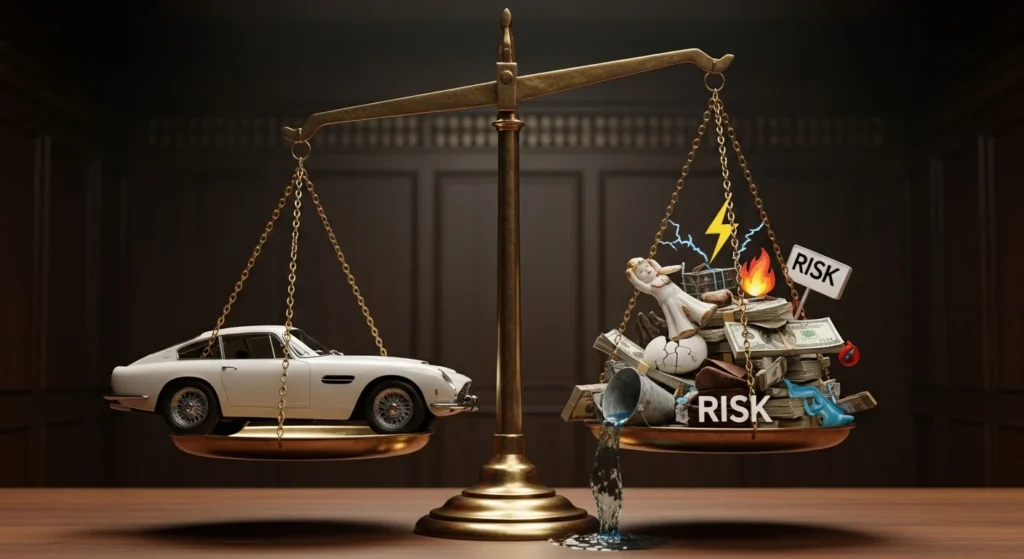
The Expense That Grows After the Purchase
Buying luxury feels like crossing a line.
You’ve made it.
You’ve earned it.
You can finally enjoy it.
Then the insurance quote arrives.
Higher premiums.
More paperwork.
Stricter conditions.
For many owners, insurance becomes one of the most surprising ongoing costs of luxury—not because insurers are greedy, but because luxury fundamentally changes the risk profile.
To understand why insurance costs rise with luxury, you need to look beyond price—and into probability.
Luxury Changes What “Risk” Means
Insurance isn’t priced on how careful you are.
It’s priced on:
- Replacement complexity
- Loss severity
- Claim unpredictability
- Recovery difficulty
Luxury amplifies all four.
A standard item is easy to replace, easy to repair, and easy to value.
Luxury items are none of those.
That difference is the foundation of higher premiums.
Replacement Is Harder, Slower, and More Expensive
When insurers calculate premiums, replacement cost matters more than purchase price.
Luxury replacement often involves:
- Limited production items
- Long waiting lists
- Brand-controlled sourcing
- International logistics
Replacing a watch from Rolex or Patek Philippe isn’t like replacing a standard timepiece. Availability alone can stretch months—or years.
Time increases cost.
Complexity increases uncertainty.
Both raise premiums.
Repair Costs Inflate Insurance Risk
Insurance doesn’t just cover total loss.
It covers partial damage.
- Specialist-only
- Brand-approved
- Documentation-heavy
- Slow and expensive
A minor accident involving a vehicle from Ferrari can result in repair bills that rival the full value of standard cars.
Insurers don’t gamble on optimistic outcomes.
They price for worst-case scenarios.
Theft Risk Rises With Visibility and Resale Value
Luxury attracts attention—wanted or not.
High-end items are:
- Easier to resell
- Easier to identify
- Easier to target
Luxury theft isn’t random. It’s strategic.
Insurers factor in:
- Targeted theft rates
- Organized resale networks
- Cross-border recovery challenges
Higher theft probability means higher premiums—even if you never feel at risk.
Customization Breaks Standard Insurance Models
Luxury often involves personalization.
Custom interiors.
Limited editions.
Bespoke finishes.
Upgraded components.
Customization complicates valuation.
If a custom detail is damaged:
- It may be irreplaceable
- It may require re-creation
- It may exceed standard policy limits
Insurers charge more to cover what they can’t easily quantify.
Comparison Table: Standard vs. Luxury Insurance Risk
| Factor | Standard Asset | Luxury Asset |
|---|---|---|
| Replacement Speed | Fast | Slow |
| Repair Network | Wide | Restricted |
| Theft Appeal | Moderate | High |
| Valuation | Stable | Volatile |
| Claim Severity | Predictable | High-impact |
The Documentation Burden Raises Costs
Luxury insurance isn’t “set and forget.”
It requires:
- Regular reappraisals
- Proof of condition
- Service records
- Secure storage verification
Each layer reduces insurer uncertainty—but adds administrative cost, which is priced into premiums.
More oversight equals higher fees.
Why Claims Are More Expensive—Even When Rare
Luxury owners often file fewer claims.
But when claims occur, they’re disproportionately costly.
Reasons include:
- Specialist labor rates
- Brand-mandated processes
- Extended downtime
- Temporary replacement expenses
One claim can outweigh years of premiums.
Insurance pricing reflects impact—not frequency.
Mistakes Owners Make That Raise Insurance Costs Further
Even experienced luxury owners unintentionally increase premiums by:
- Underinsuring to reduce cost
- Skipping regular revaluations
- Using unauthorized repair shops
- Failing to document upgrades
- Storing items improperly
These actions increase insurer risk—and lead to higher future pricing or coverage limits.
Hidden Tip: Proper Risk Management Lowers Premiums Over Time
Insurance isn’t static.
Owners who actively reduce risk often see better terms.
This includes:
- Secure storage systems
- Usage-based policies
- Bundled high-value coverage
- Transparent documentation
Luxury insurers reward predictability.
Control the risk, and costs stabilize.
Why This Matters Today
Luxury ownership is expanding faster than insurance literacy.
More people are buying high-value items without understanding:
- How insurers assess luxury risk
- Why premiums scale over time
- How small choices affect long-term cost
As luxury becomes more accessible, insurance becomes the silent gatekeeper.
Understanding this protects both assets and expectations.
Actionable Steps Before Insuring Any Luxury Asset
Before accepting a policy:
- Ask how replacement value is calculated
- Confirm repair authorization rules
- Understand storage and security requirements
- Review coverage limits for customization
- Plan for revaluation intervals
Clarity upfront prevents conflict later.
Emotional Reality: Insurance Feels Like a Penalty, But It’s Not
Many owners feel insurance punishes success.
In reality, insurance reflects exposure.
Luxury doesn’t just elevate lifestyle—it elevates consequence.
Higher premiums aren’t judgment.
They’re math.
Once you see the equation, frustration turns into strategy.
Key Takeaways
- Insurance costs rise with luxury due to higher risk exposure
- Replacement and repair complexity drive premiums
- Theft appeal and resale value increase insurer liability
- Customization complicates valuation
- Proactive risk management can stabilize costs
Frequently Asked Questions (FAQ)
1. Is luxury insurance always more expensive?
Yes, because loss severity and replacement complexity are higher.
2. Can careful ownership lower premiums?
Over time, yes—through reduced risk and better documentation.
3. Why do insurers require frequent reappraisals?
Luxury values fluctuate, and underinsurance increases claim risk.
4. Are bundled luxury policies cheaper?
Often yes, because consolidated risk is easier to manage.
5. Is skipping insurance ever smart?
Rarely. Luxury losses are typically high-impact and difficult to absorb.
Conclusion: Insurance Is the Price of Protecting Rarity
Luxury ownership changes the stakes.
What’s rare is harder to replace.
What’s valuable is harder to protect.
What’s exclusive is harder to insure.
When insurance costs rise with luxury, it’s not arbitrary—it’s aligned with reality.
Understand the system, and insurance stops feeling like a burden—and starts feeling like part of responsible ownership.
Disclaimer: This article is for general informational purposes and reflects common insurance and ownership practices. Coverage terms, costs, and requirements may vary by provider and asset.
Pingback: Why Luxury Cars Feel Effortless — The Invisible Engineering That Makes Everything Easier
Pingback: The Real Cost of Owning Luxury: What the Price Tag Never Tells You
Pingback: Why Luxury Maintenance Is Expensive: The Hidden System Behind Premium Ownership