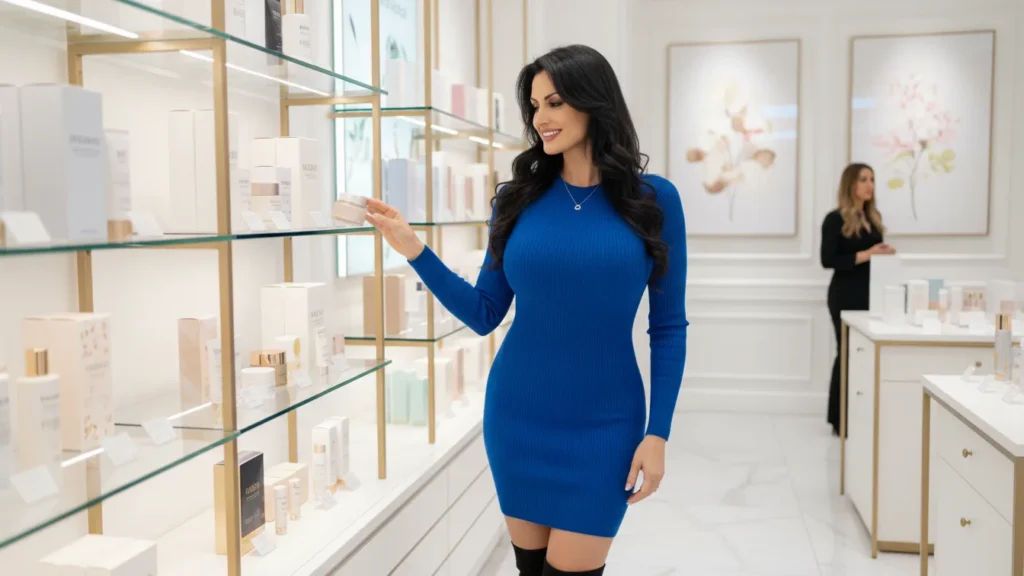
The Question Everyone Asks—but Rarely Gets a Clear Answer
You’ve stood in front of a luxury skincare counter before.
A small jar. Elegant packaging. A price tag that makes you pause.
And the same question forms quietly in your mind:
How can skincare cost this much?
It’s easy to assume the answer is branding. Marketing. Status. But that explanation is incomplete—and often misleading.
Because while some products rely heavily on image, truly high-end skincare is built on something far less visible:
time, complexity, precision, and risk.
Understanding why luxury skincare costs so much isn’t about justifying the price.
It’s about understanding what’s happening behind the formula—and why it matters more today than ever.
Luxury Skincare Is Not Just a Product—It’s a Process
Mass-market skincare is designed to scale quickly.
Luxury skincare is designed to perform consistently under stricter standards.
That difference changes everything.
From the moment an idea is conceived to the day a product reaches your shelf, luxury skincare often goes through:
- Years of formulation refinement
- Dozens of ingredient trials
- Stability testing across climates
- Compatibility testing with different skin types
- Continuous batch-level quality checks
Each step adds cost—but also control.
And control is what separates a formula that works sometimes from one that works predictably.
The Hidden Cost of Research and Development
One of the largest price drivers in luxury skincare is R&D—and it’s also the least visible.
High-end skincare brands often invest heavily in:
- In-house laboratories
- Long-term ingredient studies
- Proprietary delivery systems
- Multi-phase testing protocols
Unlike mass products that rely on existing templates, luxury formulations are frequently built from the ground up.
This means paying for:
- Failed prototypes
- Reformulations that never launch
- Ingredients that don’t pass stability tests
- Extended testing timelines
In many cases, only one formula out of dozens ever makes it to market.
Those unseen failures don’t disappear—they’re absorbed into the final price.
Ingredient Quality Isn’t Just About Rarity
Expensive skincare isn’t necessarily filled with “rare” ingredients.
It’s filled with specific versions of ingredients.
That distinction matters.
For example:
- A common ingredient may exist in 5–10 purity grades
- Only the highest grade offers optimal stability and absorption
- Higher purity often means lower yield and higher sourcing costs
Luxury skincare also prioritizes:
- Bioavailability (how well skin can use the ingredient)
- Stability over time
- Compatibility with other actives
- Minimal degradation during storage
These factors significantly affect cost—and results.
Why Formulation Matters More Than the Ingredient List
Two products can list the same ingredients.
They can still perform very differently.
Why?
Because formulation determines:
- How ingredients interact
- How they penetrate the skin
- How long they remain effective
- Whether they cause irritation or imbalance
Luxury skincare invests heavily in delivery systems—structures that help ingredients reach where they’re needed without overwhelming the skin.
This is where much of the “invisible value” lies.
The Price of Precision Manufacturing
Luxury skincare is often produced in smaller batches.
That limits economies of scale—but increases consistency.
Smaller production runs allow for:
- Tighter quality control
- Fresher formulations
- Faster adjustments if issues arise
- Reduced ingredient degradation
Mass production lowers cost per unit.
Precision production raises reliability per unit.
Luxury brands choose the latter.
Packaging Isn’t Just About Aesthetics
It’s tempting to dismiss luxury packaging as unnecessary.
But in skincare, packaging plays a functional role.
High-end skincare often uses:
- Airless pumps to reduce oxidation
- UV-protective glass
- Materials that don’t interact with active ingredients
- Sealed systems that maintain formulation integrity
These choices increase cost—but also shelf life and effectiveness.
In skincare, poor packaging can undo an excellent formula.
The Psychology of Price—and Why It Exists
Price doesn’t just reflect cost.
It also reflects expectation.
Luxury skincare prices signal:
- Slower, more deliberate use
- Higher perceived value
- Commitment to consistency
- Reduced impulse overuse
This psychological framing influences how products are applied—and surprisingly, how results are perceived.
When something is used thoughtfully and sparingly, outcomes often improve.
Luxury vs. Mass Skincare: A Clear Comparison
| Aspect | Mass-Market Skincare | Luxury Skincare |
|---|---|---|
| R&D Timeline | Short | Long-term |
| Ingredient Grades | Standard | High-purity, optimized |
| Formulation Depth | Basic | Complex, layered |
| Manufacturing | Large-scale | Small-batch precision |
| Packaging | Cost-efficient | Protective + functional |
| Consistency | Variable | Highly controlled |
| Price Driver | Volume | Quality + reliability |
Common Mistakes People Make When Buying Luxury Skincare
Luxury doesn’t automatically mean better—for every product.
Common missteps include:
- Buying luxury for trends, not needs
- Over-layering high-active formulas
- Expecting instant results
- Using too much product
- Ignoring formulation compatibility
Luxury skincare works best when used intentionally, not excessively.
How to Decide If Luxury Skincare Is Worth It For You
Ask yourself:
- Do I value consistency over experimentation?
- Is my skin sensitive or reactive?
- Do I prefer fewer, well-formulated products?
- Am I willing to use products correctly and patiently?
If yes, luxury skincare may offer real value.
If not, well-formulated mid-range products can still serve you well.
Why This Matters Today
Skin is increasingly exposed to:
- Environmental stressors
- Lifestyle-related imbalance
- Overuse of active-heavy routines
Luxury skincare isn’t about indulgence anymore.
It’s about control, restraint, and formulation intelligence.
As routines simplify, formulation quality matters more than ever.
Key Takeaways
- Luxury skincare pricing reflects process, not just branding
- R&D, formulation, and testing drive real costs
- Ingredient quality is about purity and performance, not rarity
- Packaging protects results—not just appearance
- Luxury works best when used thoughtfully, not excessively
Frequently Asked Questions
1. Is luxury skincare always better than affordable options?
No. Some mid-range products are excellent. Luxury skincare excels in consistency, formulation depth, and long-term reliability.
2. Are expensive ingredients the main reason for high prices?
Ingredients matter, but formulation, testing, and manufacturing precision are often bigger cost drivers.
3. Can luxury skincare damage skin if misused?
Any skincare—luxury or not—can cause issues if overused or layered incorrectly.
4. How long does luxury skincare take to show results?
Most products are designed for gradual, cumulative improvement rather than instant change.
5. Should beginners start with luxury skincare?
Not necessarily. Understanding your skin first makes any upgrade more effective.
Final Thoughts
Luxury skincare isn’t about excess.
It’s about intentional design, quiet science, and controlled performance.
The price reflects what you don’t see as much as what you do—the years of testing, the rejected formulas, the precision behind every drop.
Whether it’s worth it depends on what you value most.
But once you understand what goes into it, the cost no longer feels mysterious.
It feels deliberate.
Disclaimer: This article is for educational purposes only and does not replace personalized skincare advice from a qualified professional.
Pingback: Why Luxury Beauty Feels Premium (Even Before You See Results)