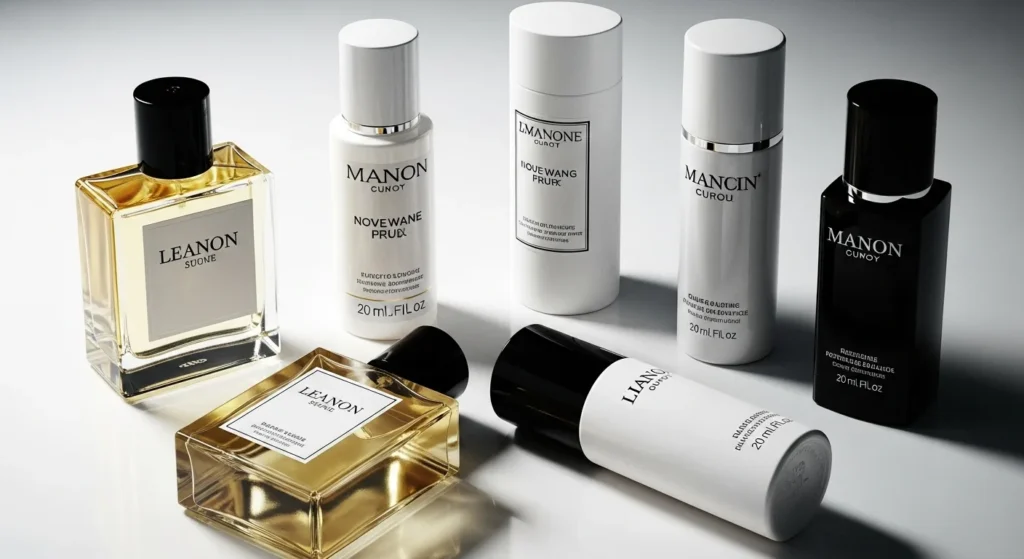
The Loudest Thing in Luxury Beauty Is What It Doesn’t Say
Walk down a beauty aisle—or scroll through an online store.
Most products compete loudly:
- “Clinically proven!”
- “Instant results!”
- “Dermatologist recommended!”
- “Clean! Vegan! Toxic-free!”
Then you see a luxury beauty product.
Soft typography.
Sparse text.
No shouting. No bullet points. No urgency.
And somehow… it feels more trustworthy.
That silence isn’t aesthetic coincidence. It’s a strategic decision rooted in psychology, consumer behavior, and long-term brand building.
Luxury beauty uses minimal labels not because it has less to say—but because it doesn’t need to convince you.
Minimal Labels Signal Confidence Before Performance
In human psychology, confidence is often communicated through restraint.
People who are secure don’t overexplain.
They don’t rush.
They don’t plead to be believed.
Luxury beauty brands apply the same principle.
A minimal label quietly communicates:
- “We’re not chasing attention.”
- “Our value isn’t fragile.”
- “You don’t need to be persuaded.”
This confidence shifts power to the consumer.
Instead of being sold to, you’re invited to choose.
That emotional shift—from pressure to permission—is a core reason luxury beauty feels calmer and more desirable.
Why Fewer Claims Create More Trust
Ironically, the more claims a label makes, the more skeptical the modern consumer becomes.
Years of exaggerated marketing have trained people to question:
- “Instant”
- “Miracle”
- “Guaranteed”
- “Scientifically proven”
Luxury beauty avoids these words not because they can’t use them—but because over-claiming erodes credibility.
Minimal labels focus on:
- What the product is, not what it promises to do
- Key ingredients, not dramatic outcomes
- Consistency over persuasion
This approach aligns with how trust actually forms: slowly, quietly, and over repeated positive experiences.
The Cognitive Relief of Minimal Labels
Modern consumers are mentally exhausted.
Every label competes for attention, demanding:
- Reading
- Decoding
- Comparing
- Evaluating risk
Luxury beauty removes that burden.
Minimal labels reduce cognitive load by:
- Limiting information to essentials
- Avoiding dense text blocks
- Using familiar, calm language
This creates emotional relief at the shelf—or on screen.
And when the brain feels relief, it associates the product with safety and ease.
That emotional association lasts longer than any marketing claim.
Why Luxury Beauty Speaks to the Informed Consumer
Minimal labeling assumes something important:
That the customer is intelligent.
Luxury beauty brands don’t assume ignorance or insecurity. They expect their audience to:
- Research if they want details
- Understand ingredient lists
- Value philosophy over hype
This respect builds a subtle but powerful bond.
Instead of “educating” loudly, luxury beauty says:
“You already know what matters.”
That mutual respect deepens loyalty far more than aggressive education ever could.
Comparison Table: Minimal Labels vs Claim-Heavy Labels
| Aspect | Claim-Heavy Beauty Labels | Luxury Minimal Labels |
|---|---|---|
| Visual Style | Busy, text-dense | Clean, restrained |
| Emotional Effect | Urgency, anxiety | Calm, confidence |
| Trust Signal | Persuasion-based | Assurance-based |
| Consumer Role | Passive recipient | Active chooser |
| Long-Term Loyalty | Low to moderate | High |
The Long-Term Brand Strategy Behind Silence
Minimal labels aren’t about short-term conversion.
They’re about brand longevity.
When a product doesn’t rely on trends, buzzwords, or regulatory loopholes, it ages better.
Luxury beauty labels often remain unchanged for years because:
- They don’t anchor to temporary claims
- They avoid language that becomes outdated
- They prioritize timeless design
This consistency reinforces stability—another deep trust signal.
People stay loyal to what feels dependable.
Why This Matters Today More Than Ever
Consumers today are:
- More educated
- More skeptical
- More emotionally driven
They don’t want louder products.
They want quieter ones they can trust.
Minimal labels cut through noise by doing the opposite of shouting. In an oversaturated market, restraint stands out.
Luxury beauty isn’t reacting to trends—it’s resisting them.
And that resistance is exactly what modern consumers crave.
Common Mistakes Brands Make When Copying Minimal Labels
Minimal doesn’t mean empty.
Many brands misunderstand this.
Mistake 1: Removing information without adding meaning
Luxury minimalism is intentional, not vague.
Mistake 2: Using minimal design with aggressive messaging elsewhere
Consistency matters. Calm packaging with loud ads breaks trust.
Mistake 3: Hiding behind minimalism to avoid transparency
Luxury brands still provide details—just in the right places.
Minimal labels work only when backed by substance.
How Consumers Can Read Between Minimal Lines
If you’re evaluating a luxury beauty product with a sparse label, look for:
- Ingredient clarity (not just buzzwords)
- Brand philosophy and history
- Consistency across products
- Tone that reassures rather than pressures
Minimal labels invite you to engage deeper—but only if you want to.
That choice itself is part of the luxury.
Key Takeaways
- Luxury beauty uses minimal labels to signal confidence and trust
- Fewer claims reduce skepticism and cognitive overload
- Minimalism shifts power from brand to consumer
- Quiet packaging creates emotional safety and long-term loyalty
- True luxury communicates through restraint, not persuasion
Frequently Asked Questions (FAQ)
1. Are minimal labels hiding information?
No. Luxury brands usually provide full details elsewhere—just not on the front label.
2. Why don’t luxury brands highlight results more clearly?
Because over-promising damages credibility and long-term trust.
3. Do minimal labels mean fewer ingredients?
Not necessarily. They reflect communication style, not formulation size.
4. Why do minimal labels feel more premium?
Because restraint signals confidence, control, and intentional design.
5. Can affordable brands use minimal labels effectively?
Yes—but only if supported by consistent quality and transparency.
Conclusion: Silence Is a Statement in Luxury Beauty
Luxury beauty doesn’t need to shout.
It doesn’t need to convince you in ten seconds or overwhelm you with promises.
By saying less, it gives you space—to think, to feel, to choose.
That space is where trust grows.
And in today’s beauty landscape, trust is the most luxurious thing of all.
Disclaimer: This article shares general branding and consumer psychology insights and is intended for informational purposes only.