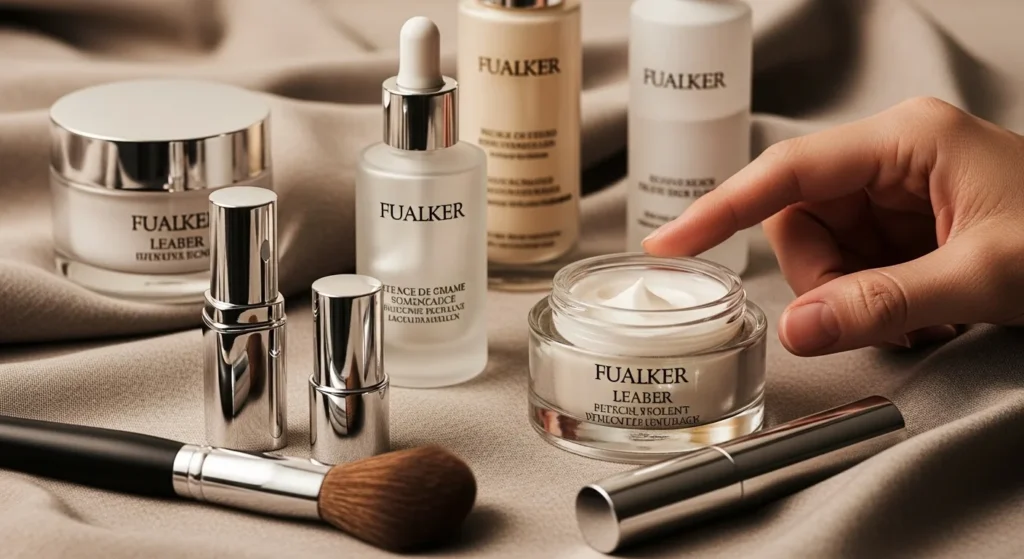
Before You Believe It Works, You Feel Something
Before results show up in the mirror,
before ingredients have time to perform,
before logic decides if the price was worth it—
Luxury beauty makes you feel something.
Calm. Control. Assurance. Pleasure.
That response isn’t accidental, and it isn’t superficial.
Luxury beauty is intentionally designed for feel because feel is how humans decide what to trust, what to repeat, and what to keep close. In a world flooded with claims, comparisons, and quick fixes, how something feels has become more powerful than what it promises.
This is the quiet science behind premium beauty—and why it continues to outperform louder, more aggressive alternatives.
Feel Is the Brain’s Fastest Decision-Maker
The human brain processes sensory input faster than rational thought.
Long before you evaluate ingredients or read reviews, your nervous system answers a simpler question:
Does this feel safe or stressful?
Luxury beauty is engineered to land firmly in the “safe” category.
From the first interaction, feel communicates:
- Control rather than chaos
- Calm rather than urgency
- Intentional design rather than mass production
This immediate sensory reassurance reduces hesitation. When something feels right, the brain stops looking for reasons to reject it.
That’s why feel comes first.
Why Luxury Beauty Designs for Emotional Comfort
Most beauty products compete on performance claims:
- Faster
- Stronger
- More dramatic
Luxury beauty competes on emotional comfort.
It understands that people don’t just want change—they want reassurance while they wait for it.
Designing for feel means considering:
- How a product spreads
- How it absorbs
- How it sits on skin over time
- How it makes the user slow down
These details don’t just enhance experience.
They lower stress.
And lower stress improves consistency—one of the biggest drivers of long-term satisfaction in beauty.
Feel Turns Application Into a Ritual
A routine is something you complete.
A ritual is something you return to.
Luxury beauty transforms application into ritual by focusing on sensory pleasure:
- Soft resistance instead of drag
- Gradual absorption instead of instant disappearance
- Balanced textures that invite touch
This changes how people interact with products.
Instead of rushing, users linger.
Instead of multitasking, they focus.
Instead of obligation, they experience intention.
That shift deepens emotional attachment and makes luxury beauty harder to replace.
Why “Feel” Builds Trust Faster Than Proof
Proof takes time.
Feel is immediate.
Before a product has the chance to demonstrate results, feel offers instant feedback:
- This is controlled
- This is predictable
- This is not aggressive
Luxury beauty relies on this early trust signal.
When a product feels gentle, balanced, and considered, the brain assumes competence—even before evidence appears.
That assumption increases patience, reduces skepticism, and creates a willingness to stay consistent.
Trust, once formed, is difficult to break.
Comparison Table: Designed for Feel vs Designed for Claims
| Feature | Claim-Driven Beauty | Feel-Driven Luxury Beauty |
|---|---|---|
| Primary Focus | Results & speed | Experience & reassurance |
| Emotional Response | Excitement or anxiety | Calm and confidence |
| Sensory Design | Secondary | Central |
| Usage Pattern | Inconsistent | Habitual |
| Loyalty Driver | Performance promises | Emotional trust |
Why This Matters Today More Than Ever
Modern consumers are overwhelmed.
Too many products.
Too many choices.
Too many promises.
In that environment, feel becomes a shortcut.
A product that feels right:
- Reduces decision fatigue
- Lowers cognitive load
- Signals safety in uncertain markets
Luxury beauty doesn’t ask consumers to analyze more—it asks them to feel more.
And in an overstimulated world, that invitation is powerful.
The Subtle Design Choices That Shape Feel
Designing for feel goes far beyond texture.
Luxury beauty considers:
- Packaging weight (heavier signals stability)
- Lid resistance (controlled effort builds satisfaction)
- Material temperature (cool glass vs warm plastic)
- Sound (soft closure vs sharp click)
Each detail reinforces the same message:
This was made carefully. You can relax.
Feel is not one element—it’s a system.
Common Mistakes When Interpreting “Feel” in Luxury Beauty
Not all pleasant-feeling products are well-designed.
Mistake 1: Equating thickness with quality
Luxury feel is about balance, not heaviness.
Mistake 2: Assuming instant absorption is better
Immediate disappearance can signal harsh formulation.
Mistake 3: Ignoring how it feels over time
True luxury feel remains comfortable minutes—and hours—later.
Feel should support skin, not distract from performance.
How to Evaluate Luxury Beauty by Feel (Actionable Steps)
Next time you test a luxury product, notice:
- How your hands move while applying
- Whether you feel rushed or relaxed
- How your skin feels after 10–15 minutes
- Whether the experience invites repetition
If feel encourages calm and consistency, the product is doing its job.
Luxury beauty succeeds when it becomes something you look forward to—not something you rush through.
Key Takeaways
- Luxury beauty is designed for feel because feel builds trust instantly
- Sensory comfort reduces stress and increases consistency
- Feel transforms routines into rituals
- Emotional reassurance sustains long-term loyalty
- When something feels right, the brain allows it to stay
Frequently Asked Questions (FAQ)
1. Is luxury beauty really designed differently, or is it just branding?
It’s both. Sensory design is intentional and supported by formulation, packaging, and ritual.
2. Why does feel matter more than results at first?
Because results take time, while feel shapes trust immediately.
3. Can feel influence how often people use products?
Yes. Products that feel good are used more consistently.
4. Is feel subjective?
Partly—but many sensory responses are universal, especially around comfort and safety.
5. Does focusing on feel mean performance matters less?
No. Feel creates trust; performance sustains it.
Conclusion: Luxury Beauty Speaks Through Sensation
Luxury beauty doesn’t rely on shouting, promising, or persuading.
It speaks through sensation.
By designing for feel, it meets the brain where decisions actually happen—before logic, before proof, before comparison.
And when something feels calm, controlled, and reassuring, the choice becomes easy.
That’s why luxury beauty isn’t just seen.
It’s felt.
Disclaimer: This article shares general insights into consumer experience and design psychology and is intended for informational purposes only.
Pingback: Why Luxury Beauty Focuses on Touch — The Sensory Secret That Makes It Feel Personal, Calming, and Worth It