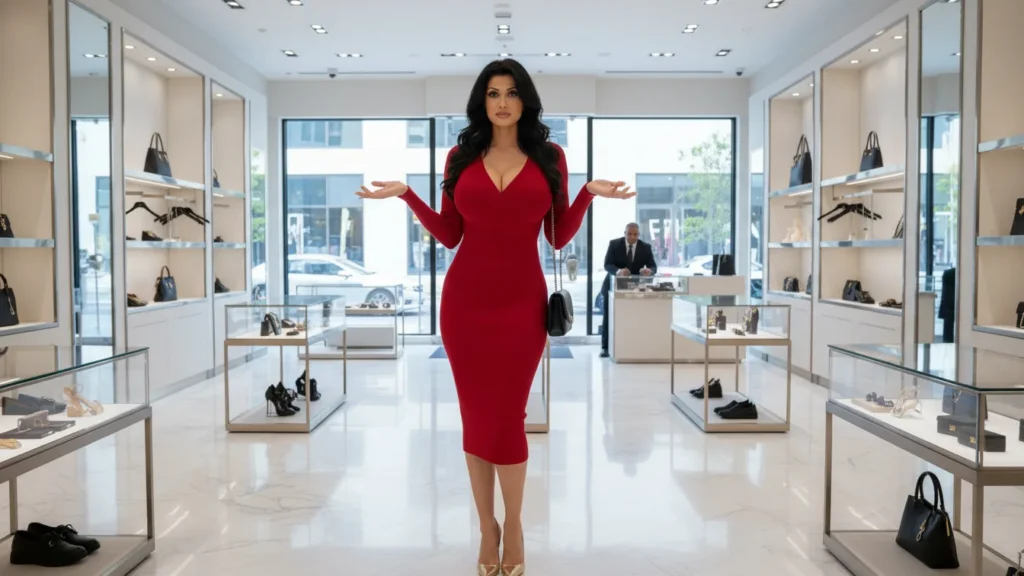
Step Inside a Luxury Store—and Feel the Silence
You walk past a luxury boutique on a busy street.
Outside: noise, crowds, urgency.
Inside: silence, space, stillness.
No queues.
No rush.
No pressure to buy.
It almost feels… empty.
And for many people, that emptiness is unsettling.
Is the store struggling?
Why does no one seem to be shopping?
How can this business survive like this?
The truth is simpler—and far more deliberate.
Luxury stores feel empty because they are designed to feel empty.
The Biggest Misunderstanding About Luxury Retail
Most people evaluate stores using mass-retail logic:
More customers = more success
Luxury operates on a different equation:
Fewer people + deeper experience = higher value
An empty-feeling luxury store isn’t a sign of low demand.
It’s a signal of controlled access.
Luxury brands do not want crowds.
They want presence.
Space Is the First Luxury Product You’re Given
Before you see a product, you experience space.
Luxury stores allocate:
- Fewer items per square meter
- Wider walkways
- Open sightlines
- Breathing room between displays
That space is not wasted.
It’s sold—just not on a price tag.
Space communicates:
- Calm
- Confidence
- Permanence
- Power
Crowds dilute all four.
Why Busy Stores Feel Cheap—Even When They Aren’t
High foot traffic creates:
- Noise
- Visual clutter
- Time pressure
- Social comparison
These cues activate bargain-hunting behavior.
Luxury needs the opposite psychological state:
- Slower heart rate
- Heightened awareness
- Emotional openness
- Sense of being chosen
An empty store helps the brain switch modes.
Luxury Stores Are Designed for One Customer at a Time
In true luxury retail, the ideal scenario is not volume.
It’s attention density.
One client.
One advisor.
One uninterrupted experience.
This is why many luxury stores feel:
- Quiet
- Observational
- Almost museum-like
You are not walking into a shop.
You are stepping into a private environment that temporarily belongs to you.
The Role of Staff: Presence Without Pressure
Luxury sales associates are trained differently.
They are taught:
- When not to approach
- How to read body language
- How to slow interactions
- How to create psychological safety
A crowded store forces speed.
An empty-feeling store allows restraint.
Restraint is a luxury signal.
Why Scarcity Starts With People, Not Products
Most discussions of luxury scarcity focus on items.
But the first scarce resource is access.
Luxury stores control:
- How many people are inside at once
- How long interactions last
- How much staff attention is available
If everyone can browse freely, value perception drops.
Empty space protects exclusivity before a single product is touched.
Real-World Examples of Intentional Emptiness
Many globally respected luxury brands rely on this strategy.
- Hermès stores often feel calm even during peak demand, reinforcing patience and privilege
- Chanel designs boutiques to feel intimate, not transactional
- Bottega Veneta uses minimal layouts to remove distraction and focus on craft
None of these brands need crowds to prove relevance.
Their emptiness is the proof.
The Psychological Effect of Walking Into an Empty Luxury Store
When a space feels empty:
- You feel more visible
- Your actions feel more intentional
- Your presence feels acknowledged
- Time slows down
This increases:
- Emotional engagement
- Willingness to explore
- Openness to storytelling
- Perceived value of objects
Luxury pricing depends on this state of mind.
Why Luxury Stores Avoid “Impulse Energy”
Mass retail thrives on impulse.
Luxury thrives on contemplation.
Impulse requires:
- Speed
- Stimulation
- Urgency
- Fear of missing out
Luxury prefers:
- Slowness
- Reflection
- Anticipation
- Desire without pressure
An empty-feeling store removes impulse triggers on purpose.
Empty Stores Signal Financial Confidence
Here’s a subtle but powerful message emptiness sends:
That message builds trust.
It suggests:
- Long-term stability
- Selective clientele
- Brand patience
- Financial resilience
Desperation repels luxury buyers.
Comparison: Luxury Stores vs High-Volume Retail
| Feature | High-Volume Retail | Luxury Stores |
|---|---|---|
| Foot Traffic | Maximized | Controlled |
| Space Usage | Dense | Open |
| Noise Level | High | Low |
| Staff Interaction | Transactional | Relationship-based |
| Shopping Speed | Fast | Slow |
| Emotional State | Urgent | Calm |
Luxury stores are engineered to feel different—because they are.
Why This Matters Today
Modern consumers are overwhelmed.
Endless notifications.
Endless choices.
Endless urgency.
Luxury stores offer something rare:
Mental relief.
The emptiness isn’t absence.
It’s protection—from overload.
That’s why these spaces feel increasingly valuable, not outdated.
Hidden Insight: Emptiness Filters the Audience
Not everyone is comfortable in quiet spaces.
Some people rush.
Some feel exposed.
Some feel unwelcome.
Luxury stores don’t correct that discomfort.
They let it work as a filter.
Those who stay are more likely to:
- Value the brand
- Respect the process
- Accept the pricing
- Return intentionally
Common Mistakes People Make When Interpreting Empty Luxury Stores
- Assuming low sales instead of high margins
- Expecting entertainment instead of intention
- Confusing silence with snobbery
- Comparing luxury retail to malls or outlets
Luxury stores are not built to reassure everyone.
They are built to resonate with the right few.
Actionable Insight: How to Read a Luxury Store Correctly
Next time you walk into one:
- Notice how space guides movement
- Observe how staff wait instead of chase
- Pay attention to sound—or lack of it
- Watch how products are spaced, not stacked
The store itself is communicating value before you ever ask a question.
Key Takeaways
- Luxury stores feel empty by design, not by accident
- Space is a core part of the luxury product
- Fewer customers enable deeper experiences
- Silence signals confidence and permanence
- Controlled access protects brand value
- Emptiness filters for the right audience
Frequently Asked Questions
1. Are luxury stores empty because fewer people can afford them?
Not exactly. Demand often exceeds supply, but access is intentionally controlled.
2. Do empty stores mean luxury brands are struggling?
No. Many luxury brands maintain high profitability with low foot traffic.
3. Why don’t luxury stores use promotions to attract crowds?
Because crowds dilute exclusivity and weaken long-term brand value.
4. Is the quiet atmosphere meant to intimidate shoppers?
No. It’s designed to slow the experience, not discourage it.
5. Will luxury stores ever become busier like mass retail?
Unlikely. Their value depends on remaining distinct from volume-driven environments.
Final Thoughts: Emptiness Is the Point
Luxury stores don’t sell urgency.
They sell assurance.
They don’t chase attention.
They create presence.
That quiet, empty feeling isn’t a flaw.
Disclaimer: This article is intended for general educational insight into retail design and consumer psychology and does not offer purchasing or financial advice.
Pingback: Why Quiet Signals Carry More Power Than Loud Ones
Pingback: Why Status Feels Physical, Not Logical
Pingback: Why Luxury Hotels Instantly Relax Your Brain (Even Before You Sleep)