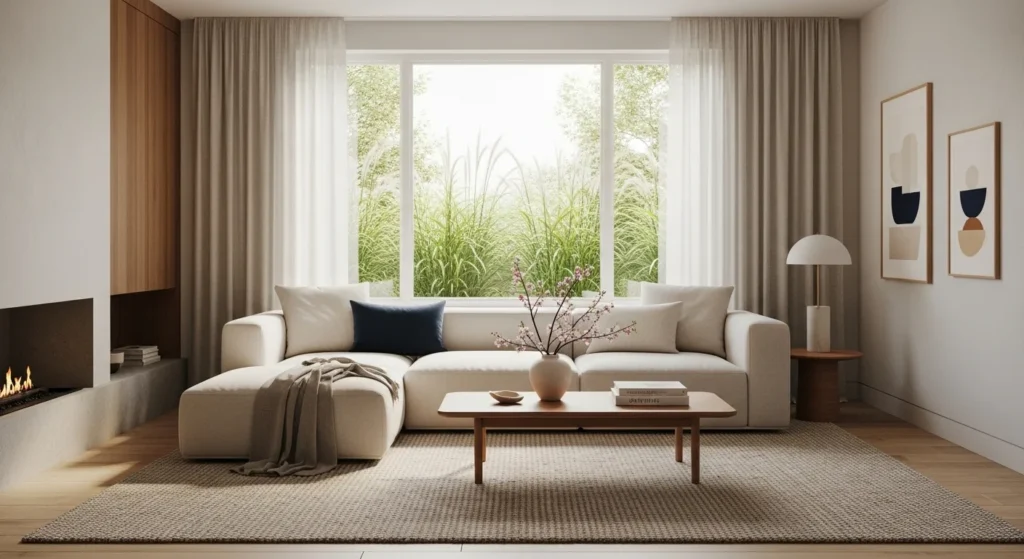
The Strange Calm You Feel Around Real Luxury
Think about the most luxurious place you’ve ever been.
It probably wasn’t noisy.
It didn’t demand attention.
Nothing tried to impress you.
Instead, you felt something subtle.
Your shoulders relaxed.
Your breathing slowed.
Your mind felt… quieter.
That reaction isn’t accidental.
Luxury doesn’t feel calm by chance.
It feels calm by design.
Loudness Is a Signal of Effort — Calm Signals Control
In psychology, noise usually means effort.
Trying to be noticed.
Trying to convince.
Trying to prove worth.
True luxury doesn’t need to try.
Calmness signals:
- Confidence
- Stability
- Control
When something is genuinely valuable, it doesn’t rush to announce itself.
That’s why real luxury rarely shouts.
It assumes recognition.
The Evolutionary Link Between Calm and Safety
The human nervous system is constantly scanning for danger.
Noise, chaos, and excess trigger alertness.
Silence, balance, and order trigger safety.
Historically:
- Calm environments meant security
- Loud environments meant threat or competition
Luxury environments replicate the signals of safety:
- Spaciousness
- Soft materials
- Predictable rhythms
Your body responds before your mind labels it “luxury.”
Why Quiet Spaces Feel More Expensive
Walk into a high-end hotel, boutique, or residence.
Notice what’s missing:
- No clutter
- No harsh lighting
- No overwhelming choices
Luxury removes friction.
It creates mental space.
That’s why brands like Bottega Veneta or The Row rely on understatement rather than spectacle.
Silence becomes part of the experience.
Loud Luxury vs Quiet Luxury: A Psychological Comparison
| Element | Loud Luxury | Quiet Luxury |
|---|---|---|
| Emotional Effect | Stimulation | Calm |
| Primary Goal | Attention | Ease |
| Design Approach | Maximal | Intentional |
| Status Signal | Visibility | Confidence |
| Longevity | Trend-driven | Timeless |
Quiet luxury lasts longer because it doesn’t exhaust the senses.
Why Wealthy People Prefer Subtlety Over Display
As people gain security, their needs shift.
They no longer need:
- Validation
- Proof
- External recognition
Instead, they prioritize:
- Comfort
- Privacy
- Emotional ease
This is why high-net-worth consumers gravitate toward:
- Minimal logos
- Neutral palettes
- Personalized experiences
Luxury becomes felt, not shown.
The Role of Cognitive Load in Luxury Design
Your brain has limited attention.
Loud environments:
- Increase cognitive load
- Create fatigue
- Demand constant processing
Luxury reduces cognitive demand.
How?
- Fewer visual elements
- Clear spatial hierarchy
- Predictable sensory input
Calm is not emptiness.
It’s curated simplicity.
Why This Matters Today (More Than Ever)
Modern life is loud by default.
Notifications.
Algorithms.
Endless choice.
Luxury now acts as a counterbalance.
It offers:
- Mental quiet
- Decision relief
- Emotional regulation
In a world optimized for noise, calm becomes the ultimate premium.
Real-Life Examples of Calm Luxury
You see this pattern everywhere:
- High-end spas use muted tones and silence
- Premium airlines design cabins for sensory calm
- Luxury homes prioritize light, air, and negative space
Even luxury cars reduce engine noise, vibration, and visual clutter.
The message is consistent:
“You don’t need to be alert here.”
Hidden Tip: Calm Is the Most Expensive Ingredient
Anyone can add more.
Only luxury can remove without fear.
Calm requires:
- Confidence in value
- Trust in the audience
- Long-term thinking
This is why over-branding often signals insecurity.
True luxury dares to be quiet.
Common Mistakes People Make About Luxury
Many misunderstand what luxury really is.
Mistakes include:
- Equating price with noise
- Assuming visibility equals status
- Over-accessorizing spaces or style
- Chasing trends instead of timelessness
Luxury isn’t about more.
It’s about less, done perfectly.
How to Apply Quiet Luxury Thinking in Everyday Life
You don’t need wealth to adopt luxury principles.
Actionable steps:
- Reduce visual clutter in your space
- Choose quality over quantity
- Create moments without urgency
- Invest in comfort that lasts
Luxury is a mindset before it’s a purchase.
The Emotional Payoff of Calm Luxury
When luxury is calm:
- You feel grounded
- You feel unpressured
- You feel in control
That emotional state is rare.
And rarity creates value.
Key Takeaways
- Luxury feels calm because calm signals safety and control
- Loudness often indicates effort, not value
- Quiet luxury reduces cognitive and emotional load
- Modern luxury prioritizes ease over attention
- Calm has become one of the most expensive experiences
Frequently Asked Questions
1. Is quiet luxury just minimalism?
No. Quiet luxury focuses on quality, not emptiness.
2. Why do logos feel less luxurious now?
Because visible branding signals the need for recognition.
3. Can calm luxury exist in small spaces?
Yes. Calm comes from intention, not size.
4. Why does quiet luxury feel more confident?
Because it doesn’t seek approval.
5. Is quiet luxury a trend or a shift?
It’s a long-term shift rooted in psychology, not fashion cycles.
Conclusion: Luxury Calms Because It Doesn’t Compete
Luxury doesn’t rush.
It doesn’t shout.
It doesn’t chase attention.
It creates space.
In that space, your mind rests.
Your body softens.
Your status feels secure without display.
That’s why true luxury feels calm.
Not because it’s silent.
But because it has nothing to prove.
Disclaimer: This article reflects general lifestyle and design psychology insights; individual perceptions of luxury and comfort may vary.
Pingback: Why Luxury Feels Timeless
Pingback: The New Status Symbols People Care About More Than Money
Pingback: Why Truly Wealthy People Rarely Talk About Money — The Psychology of Quiet Luxury
Pingback: Why Luxury Hotels Instantly Relax Your Brain (Even Before You Sleep)