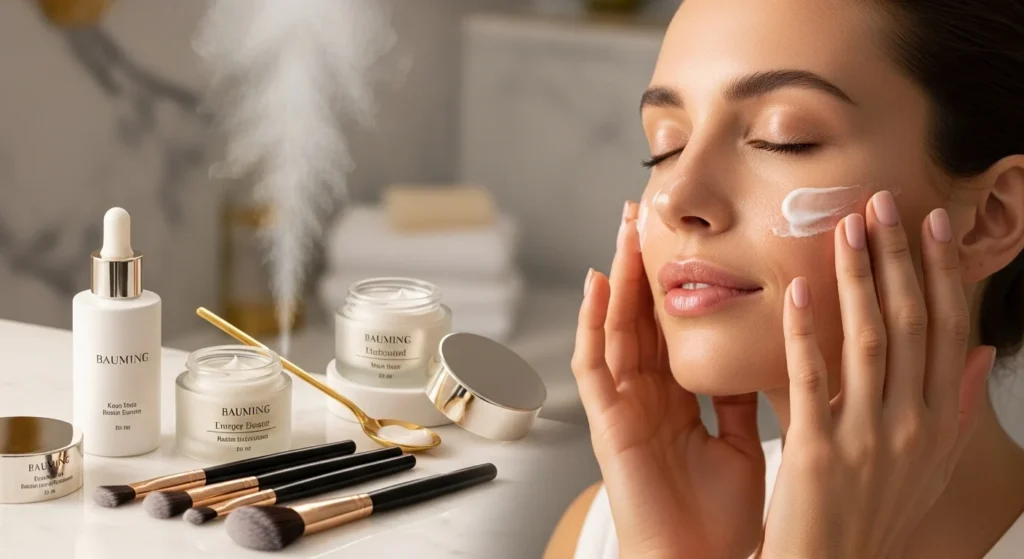
Why Luxury Beauty Feels Different Before You See Results
You don’t fall in love with luxury beauty because of an ingredient list.
You fall in love before that.
The moment the jar opens.
The way the cream melts into skin.
The weight of the packaging in your hand.
The subtle scent that disappears just fast enough.
Luxury beauty doesn’t wait to prove itself in weeks.
It convinces you in seconds.
This isn’t accidental.
And it isn’t superficial.
Luxury beauty focuses on sensation because sensation is how the brain decides what feels trustworthy, effective, and worth repeating.
Before logic.
Before science claims.
Before visible results.
And once you understand why this matters, you’ll never look at high-end beauty the same way again.
Sensation Is the Brain’s Fastest Trust Signal
The human brain evolved to judge quality through sensory feedback.
Long before labels or certifications existed, we relied on:
- Texture to signal richness or scarcity
- Scent to indicate safety or refinement
- Weight to imply durability and value
- Sound (like a jar closing) to suggest precision
Luxury beauty uses these ancient cues deliberately.
When a serum glides effortlessly or a balm melts at body temperature, your nervous system registers:
This feels right.
That feeling creates instant trust, even before you read a single benefit claim.
Why Sensory Pleasure Precedes Performance in Luxury Beauty
Here’s a truth most brands won’t say out loud:
If a product feels unpleasant, most people won’t use it long enough to see results.
Luxury beauty understands compliance psychology.
When a product feels indulgent:
- You apply it more consistently
- You use the correct amount
- You look forward to the ritual
- You associate it with self-care, not obligation
That’s why brands like Chanel, La Mer, and Dior invest heavily in sensory formulation—not just actives.
Results don’t come from ingredients alone.
They come from habits.
And sensation builds habits.
Texture: The Silent Language of Luxury
Texture is one of the most powerful sensory signals in beauty.
Luxury textures often feel:
- Dense but not heavy
- Silky without residue
- Cushioning rather than greasy
- Absorbing yet comforting
These qualities are hard to replicate cheaply.
They require:
- Advanced emulsification
- Precise oil-to-water balance
- Time-consuming formulation testing
That’s why luxury creams feel engineered, not mixed.
Your skin may not understand chemistry—but it understands comfort.
Scent: Why Luxury Beauty Smells Subtle, Not Loud
Mass-market beauty often smells strong to signal “fresh” or “active.”
Luxury does the opposite.
Luxury scents are designed to:
- Appear briefly
- Feel intimate, not invasive
- Evoke calm, warmth, or familiarity
- Fade quickly so they don’t compete with perfume
This restraint signals confidence.
A product that doesn’t need to shout feels more refined—and psychologically, more trustworthy.
Packaging Sensation: The First Physical Promise
Before a product touches skin, it touches your hands.
Luxury packaging is engineered to communicate:
- Weight → value
- Smooth edges → care
- Controlled dispensing → precision
- Sound → closure quality
A softly weighted glass jar subconsciously says:
This was made slowly and intentionally.
That message primes your expectations before application even begins.
Comparison Table: Luxury Beauty vs Mass Beauty Sensory Strategy
| Element | Luxury Beauty | Mass Beauty |
|---|---|---|
| Texture | Custom, slow-melting, refined | Functional, fast-absorbing |
| Scent | Subtle, transient, emotional | Strong, persistent |
| Packaging | Weighted, tactile, precise | Lightweight, practical |
| Emotional Impact | Ritual, pleasure, trust | Utility, speed |
| Usage Behavior | Consistent, mindful | Occasional, rushed |
This difference isn’t cosmetic.
It changes how products are experienced and used.
Why Sensation Creates Perceived Efficacy
Here’s the uncomfortable truth:
People often judge effectiveness by how a product feels, not just by results.
If a cream feels luxurious:
- Users report higher satisfaction
- Users believe it’s working sooner
- Users tolerate slow results better
This doesn’t mean luxury beauty is deceptive.
It means it understands the mind–skin connection better than most.
Perception influences consistency.
Consistency influences outcomes.
Real-Life Example: The Luxury Beauty Ritual Effect
Consider two moisturizers with similar hydration benefits.
One feels thin, scentless, and forgettable.
The other feels velvety, calming, and indulgent.
Which one gets used every night?
Which one becomes a ritual instead of a task?
Luxury brands design for emotional repetition, not just functional application.
Common Mistakes Consumers Make About Luxury Sensation
1. Assuming Sensation Means “No Science”
Luxury beauty often combines sensory excellence with clinical formulation—not instead of it.
2. Believing Texture Is Just Marketing
Texture engineering is one of the most technically difficult aspects of formulation.
3. Thinking Results Should Be Instant
Luxury focuses on experience + long-term consistency, not shock-and-awe effects.
How to Choose Luxury Beauty That Uses Sensation Well
Look for products that:
- Feel pleasant without feeling heavy
- Have scents that fade quickly
- Encourage slow, mindful application
- Improve your routine, not complicate it
If a product makes you want to rush through it, it’s not doing its job.
Why This Matters Today
Modern life is overstimulating, rushed, and screen-driven.
Luxury beauty offers something rare:
- A pause
- A tactile moment
- A sensory anchor
In a world obsessed with speed, luxury sells presence.
And sensation is how presence begins.
Key Takeaways
- Luxury beauty focuses on sensation because sensation builds trust faster than claims
- Texture, scent, and packaging influence usage consistency
- Sensory pleasure improves long-term results by reinforcing habits
- Luxury sells ritual, not just outcomes
- The experience is part of the performance
FAQ
Why does luxury skincare feel better than regular skincare?
Because it invests heavily in texture engineering, sensory balance, and formulation refinement.
Does sensation mean luxury beauty is less effective?
No. Sensation improves compliance, which often improves real-world effectiveness.
Why are luxury scents so subtle?
Subtlety signals refinement and avoids sensory fatigue or irritation.
Is luxury beauty worth it if ingredients look similar?
Ingredients matter—but experience determines how consistently those ingredients are used.
Can mass brands replicate luxury sensation?
Rarely at scale. Sensory refinement is expensive, time-consuming, and difficult to mass-produce.
Conclusion: Luxury Beauty Sells a Feeling for a Reason
Luxury beauty doesn’t start with promises.
It starts with how it makes you feel.
Because before skin changes, habits change.
Before habits change, emotions shift.
And before emotions shift, sensation leads the way.
That’s why luxury beauty doesn’t just work on your skin.
It works on your senses—first.
Disclaimer: This article is for educational and informational purposes only and does not replace professional skincare or cosmetic advice.
Pingback: Why Luxury Beauty Is Slow — The Deliberate Pace That Makes It Feel Calmer, Safer, and Worth Trusting