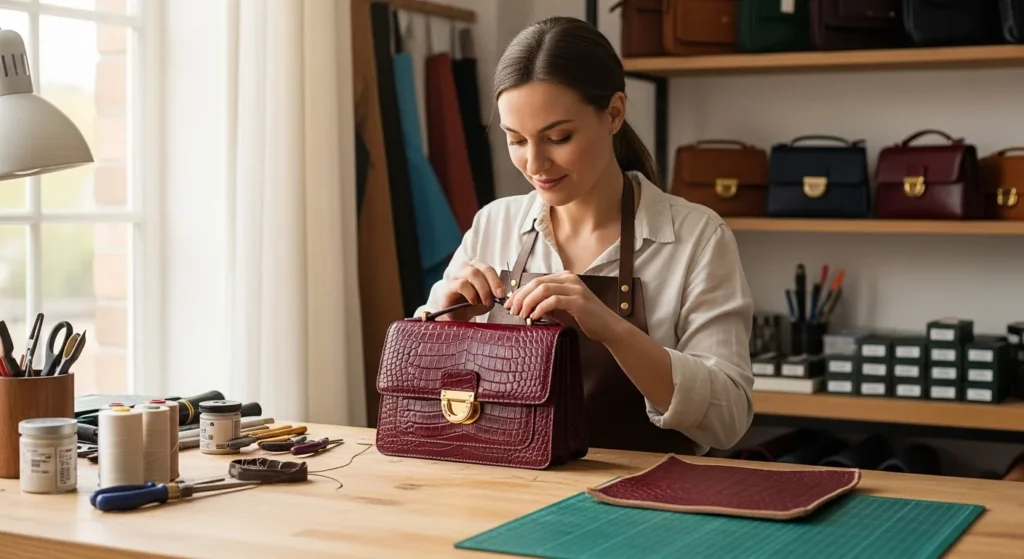
Luxury Begins Where the Machine Ends
Pick up a true luxury object.
Not a logo-heavy item.
Not a trend-driven piece.
But something quietly exceptional.
What you’re holding isn’t just a product.
It’s time, skill, and human judgment—compressed into form.
This is why craftsmanship stories matter.
In a world optimized for speed, automation, and scale, luxury lifestyle brands survive by doing the opposite. They slow down. They preserve skill. They celebrate hands.
And the story behind those hands often matters as much as the object itself.
Craftsmanship Is the Emotional Core of the Luxury Lifestyle
Luxury lifestyle isn’t about owning more.
It’s about owning better.
Craftsmanship stories give luxury its emotional depth because they answer questions buyers rarely ask out loud:
- Who made this?
- How long did it take?
- What knowledge lives inside it?
- Why can’t this be rushed or copied?
Without craftsmanship, luxury becomes decoration.
With craftsmanship, it becomes heritage you can touch.
Why Craftsmanship Stories Build Trust Instantly
Trust is fragile in luxury.
High prices demand belief.
Craftsmanship stories create that belief by showing:
- Human effort
- Mastery earned over decades
- Techniques that can’t be automated
- Standards that machines can’t judge
When a brand explains how something is made—without overselling—it shifts perception from “expensive” to “earned.”
That shift is everything.
The Psychological Difference Between “Made” and “Crafted”
Mass products are made.
Luxury products are crafted.
That single distinction changes how the brain values an object.
Craftsmanship stories activate:
- Respect for skill
- Appreciation for patience
- Emotional attachment to process
People don’t just buy the result.
They buy the discipline behind it.
And discipline is deeply aspirational.
Real-World Examples Where Craftsmanship Stories Define Luxury
Hermès
Hermès doesn’t lead with trends.
It leads with craft.
From saddle stitching to hand-finished leather edges, Hermès repeatedly centers the maker, not the market.
Each product feels less like an item—and more like a continuation of a lineage.
Rolex
Rolex rarely chases novelty.
Instead, it emphasizes precision, tolerance, and long-term reliability—skills refined over generations.
Its craftsmanship story isn’t flashy.
It’s disciplined.
And that restraint reinforces trust.
Bottega Veneta
Long before “quiet luxury” became popular language, Bottega Veneta focused on intrecciato weaving.
No loud logos.
No explanation overload.
Just technique—repeated until perfection became invisible.
Why Craftsmanship Stories Feel More Valuable Than Marketing Claims
Marketing claims say:
- “Best quality”
- “Premium materials”
- “Exceptional design”
Craftsmanship stories show:
- How long it took to learn the skill
- Why mistakes still matter
- Where judgment replaces automation
One feels promotional.
The other feels honest.
Luxury audiences can sense the difference instantly.
Craftsmanship as a Form of Cultural Preservation
Luxury craftsmanship is often one of the last places where endangered skills survive.
Hand weaving.
Leather tanning.
Mechanical watchmaking.
Stone setting.
When brands tell craftsmanship stories, they’re not just selling objects.
They’re preserving culture.
That cultural role gives luxury moral weight—something no algorithm can replicate.
Craftsmanship vs Fast Luxury: A Clear Contrast
| Aspect | Craftsmanship-Driven Luxury | Trend-Driven Luxury |
|---|---|---|
| Production Speed | Slow, deliberate | Fast, seasonal |
| Skill Dependency | High | Low |
| Emotional Value | Deep, lasting | Short-lived |
| Copy Resistance | Strong | Weak |
| Long-Term Appeal | Timeless | Time-bound |
Craftsmanship doesn’t chase relevance.
It outlasts it.
Why This Matters Today More Than Ever
Modern life is frictionless.
One-click purchases.
Same-day delivery.
Instant replacements.
In that environment, handcrafted luxury feels almost rebellious.
Craftsmanship stories matter because they:
- Reintroduce patience
- Reward attention
- Slow consumption
They remind people that some things should take time.
The Hidden Mistake Brands Make With Craftsmanship Stories
Many brands talk about craftsmanship—but don’t show it.
Common mistakes include:
- Over-romanticizing without detail
- Using vague language
- Turning craft into marketing theater
- Explaining too much, too loudly
True craftsmanship stories are:
- Specific
- Quiet
- Confident
- Repetitive in standards, not slogans
Luxury never begs appreciation.
It assumes discernment.
Why Craftsmanship Stories Increase Perceived Longevity
When buyers understand how something is made, they treat it differently.
They:
- Maintain it
- Repair it
- Pass it down
- Keep it longer
Craftsmanship stories transform objects into companions.
That longevity reinforces sustainability—not through slogans, but behavior.
Actionable Lessons for Luxury Lifestyle Brands
You don’t need centuries of history to tell craftsmanship stories.
You need:
- Clear process visibility
- Respect for skill acquisition
- Consistent quality standards
- Fewer claims, more proof
- Patience in communication
Craftsmanship stories aren’t content.
They’re commitments.
Hidden Tip: Let Imperfection Speak
Machines hide flaws.
Craftsmanship acknowledges them.
Subtle variation signals:
- Human involvement
- Individual judgment
- Authenticity
Luxury buyers don’t fear imperfection.
They fear sameness.
Key Takeaways
- Craftsmanship stories give luxury emotional and cultural depth
- They build trust without persuasion
- They protect brands from trend fatigue
- They encourage longevity and care
- They transform objects into heritage
Frequently Asked Questions (FAQ)
1. Are craftsmanship stories only relevant to traditional luxury?
No. Even modern brands benefit when they show discipline and process.
2. Do younger audiences care about craftsmanship?
Yes—especially when it connects to authenticity and sustainability.
3. Can craftsmanship stories justify high prices?
They don’t justify—they contextualize.
4. Is craftsmanship the same as heritage?
Not always. Heritage is history. Craftsmanship is practice.
5. How often should brands tell craftsmanship stories?
Consistently, but quietly—without repetition fatigue.
Conclusion: Craftsmanship Is Luxury’s Quiet Proof
Luxury doesn’t need to shout its value.
It shows it—through hands, time, and standards that don’t bend.
Craftsmanship stories matter because they remind people that excellence is learned, protected, and passed forward—not manufactured overnight.
In a fast world, craftsmanship gives luxury its soul.
Disclaimer: This article is for general informational and lifestyle education purposes and reflects branding and cultural perspectives, not commercial or investment advice.
Pingback: Why Luxury Brands Invest in Heritage — The Timeless Asset That Money Can’t Buy